Showing posts with label ideas. Show all posts

09 April 2015

Review of The Boy Who Harnessed the Wind by William Kamkwambe

An inspiring and poignant story about a young man's thirst for knowledge, and drive to improve the lives of his family and neighbors.

William Kamkwambe, recognizing the need for knowledge and having a hunger for learning, studied on his own, often walking many kilometers to get books. He spent many spare moments, when not working the fields with his father, learning and experimenting.

He began his experiments with little formal education, proving that it's not the educational system that holds people back, but small dreams and little action. William Kamkwambe was committed to his dream, and his inventiveness and resourcefulness show that to succeed you must use what you have and keep working to get what you need.

Like all inventors and innovators, Kamkwambe had setbacks and failures. Somehow, he had learned that these things meant: try a different way.

I hope you'll read this book and I hope it inspires you to look for creative ways to make life better for you and others.

20 August 2014

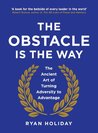
Review of The Obstacle is the Way

The Obstacle is the Way: The Timeless Art of Turning Adversity to AdvantageThe Obstacle is the Way: The Timeless Art of Turning Adversity to Advantage by Ryan Holiday
My rating: 5 of 5 stars

I enjoyed this book, even though it isn't super deep. It is not your typical self-help book. I like how Holiday pulled from so many different great thinkers and people who have done things even in the face of tremendous adversity.

Some books are great because they introduce you to other books. This is such a book. I was introduced to Lincoln's Melancholy: How Depression Challenged a President and Fueled His Greatness, which I am thoroughly enjoying; The River of Doubt: Theodore Roosevelt's Darkest Journey, which I will soon be thoroughly enjoying; among others. Also, I got a good taste of Marcus Aurelius's Meditations and the writings of Epictetus. Yeah, I know, I shoulda already read them a looong time ago, but I haven't, so leave me alone or I'm telling Mom!

If you are interested in Stoicism, or if you just seem to have an inordinate amount of hardship, this is a good introduction to the kind of thinking that can help you develop the toughness of mind to, like, conquer the world (if that is your desire); or, it can help you just to get through your normal daily pile of smelly stuff without getting too much on you.

My way of looking at the rocks and hard places that I regularly encounter has changed. When I was younger, I was more resilient; now that I'm older, I needed a little reminder that I can handle things if I have the right attitude.

If you're already perfect and resiliency is your superpower, then you can probably skip this book. If, however, you need a little refresher course on how to handle the small stuff that makes you sweat whether you want to or not, then you could do worse than giving Holiday's book a quick read.

Get yourself a copy, here:
The Obstacle Is the Way: The Timeless Art of Turning Trials into Triumph
View all my reviews

26 July 2014

Review of Stumbling on Happiness by Daniel Gilbert

Stumbling on HappinessStumbling on Happiness by Daniel Gilbert
My rating: 5 of 5 stars

This is an enjoyable book, at times laugh-aloud funny, but always serious. The topics he covers have been covered before, but I can't remember the last time I enjoyed reading about them so much.

Gilbert states that we often don't really know what makes us happy; that we often do things believing they will make us happy, but we misjudge because we base our future on the memories of our past. Often, those memories are unreliable. These thoughts aren't new, but the way Gilbert presents them is and it is worth the laughs you'll get to read them.

It did slow down a little toward the end, the density of the information building, but Gilbert does a good job of keeping it accessible and fun.

View all my reviews

Review of The Tools by Phil Stutz and Barry Michels

The Tools: Transform Your Problems into Courage, Confidence, and CreativityThe Tools: Transform Your Problems into Courage, Confidence, and Creativity by Phil Stutz
My rating: 4 of 5 stars

I am working through The Tools: 5 Tools to Help You Find Courage, Creativity, and Willpower--and Inspire You to Live Life in Forward Motion a second time. Initially, I thought that a lot of what Barry Michels and Phil Stutz teach here seems very New-Agey. After thinking about the Tools, I see that the Tools have cognates in Buddhism (esp. Tibetan Buddhism as it has come to North America). Active Love can easily be related to the practice of Tonglen: giving and receiving. A person first must receive love before it can be given.

Okay, you can say: "That isn't real, you're not really giving anything to anyone." I have to agree with that. I'm reminded of Elizabeth Gilbert and the "sending light and love" idea she writes about in Eat, Pray, Love. Even if you don't believe that you are sending actual love to someone, that is not the point. The point is: You are practicing loving that person; if you love someone, you have a harder time being angry (or sad, vindictive, or any other negative emotional state) toward/about that person. I have used Active Love more than any of the other Tools in this book and I can say that it has made it easier for me to stop renting space to those people who have "done me wrong." We often give too much thought to those people we dislike. I have no idea why. But, if you're like me, i.e. sick of doing that, then you'll read this book and use these tools to STOP DOING THAT!!!

What these tools do (only if you use them and use them use them) is give YOU more control over what YOU focus on. And, that is what the last tool focuses on: how to keep yourself using the tools. The authors say that these are not magic pills that you can use only once and then forget. Like anything that really matters, you will have to work at making the changes you want to make in your life.

Barry Michels writes that he was skeptical about the Tools initially, too, but that as he kept using them he realized how much they were helping him. Yes, there may be a time of uncomfortable repetition, but eventually the lack of faith is overcome by belief; and any self help program requires some degree of faith (in my humble opinion).

The authors recommend really sticking to the program, really giving it your all; they recommend not trying them once and then, immediately jumping on to another program and then, to another. As the writers argue is what is often done in consumerist societies: always looking for a magic pill, whether it's weight-loss, money-making, time-management, or whatever.

I have had some success with these tools. Does that mean that you'll have success with them? I have no idea. As usual, all I can say is: read it and use them and see for yourself.

Get yourself a copy, here:
The Tools: 5 Tools to Help You Find Courage, Creativity, and Willpower--and Inspire You to Live Life in Forward Motion

View all my reviews

31 May 2014

Review of Jorge Luis Borges's A Personal Anthology

A Personal AnthologyA Personal Anthology by Jorge Luis Borges
My rating: 5 of 5 stars

This is one of my favorite anthologies. I continue to re-read several of the stories, poems and essays. Borges was a master of the author-identity concept. Many authors attempt to spin an identity separate from the "real" them which is the identity they present to their public, to their readers.

Borges writes that he wants the works in this anthology to be representative of his work; he wants these works to speak for him.

I don't read Spanish, yet, so I can't say how close to the original these translations are, but they are wonderful to read and I imagine are very good.

If you're interested in identity in literature, Latin American literature, influence, or in literature in general, read this. I highly recommend anything by Borges, but like any literature, you have to read for yourself to truly to discover if you will enjoy it. And, with Borges, you should try to read a wide swath of his work, because it varies. That's what makes this a great choice for introduction to his work, it gives a taste of his fiction, poetry and essays (which, you may know are not always non-fiction).

Enjoy!

View all my reviews

Get yourself a copy here:
A Personal Anthology

04 May 2014

Review of Heretics: The Creation of Christianity from the Gnostics to the Modern Church by Jonathan Wright

Heretics: The Creation of Christianity from the Gnostics to the Modern ChurchHeretics: The Creation of Christianity from the Gnostics to the Modern Church by Jonathan Wright
My rating: 5 of 5 stars

This is an informative book, well-written and with an easy to read style/voice. It's good enough that I plan to re-read it, hoping to get even more out of it. I'm very interested in Church/Christian History as a whole, but especially enjoy reading history from an objective perspective. I don't get the sense that I'm reading a particular brand of Christianity's history, or even a history with too much slant on it, i.e. it’s not making up my mind for me, but simply presenting information and allowing me to think and make conclusions for myself.

According to Wright without heresy, orthodoxy may never have been solidified. He writes, “Heresy certainly helped define orthodoxy, but it still required a bold leap to equate that orthodoxy with the only reputable version of Christianity” (82). This last statement is a thought I have often had, but have not been able to put into words as clearly as Wright does. Wright is not giving a prescription, here, but rather a description. Again, he lets the reader come to their own conclusions.

Wright presents representative arguments from all sides before, during and after the seemingly all-important councils. The arguments on the Trinity vs. Unitarian concepts; the god-nature vs. human nature of Jesus Christ. He discusses how the Holy Spirit slowly changed from an almost afterthought to one third of the Trinity. He gives information on the various heresies and the people who were accused of holding them and what happened to them. And, as Wright states, “we are reminded that the line between orthodoxy and heterodoxy was always very thin” (104). This is even more true today.

According to others (e.g. Ross Douthat) heresy is now almost the norm, having overcome the most staid and staunch orthodoxy. Wright takes a different thought, writing that “[i]t is hard to reach a firm conclusion. Was there really more heresy during the medieval era, or simply more attempts to seek it out and eradicate it?” (135). I tend to be between the two ideas, that there is heresy. I think it’s prominent because of modern knowledge (particularly scientific knowledge). In order to keep people interested, the leaders in churches have to avoid deep theological issues. In order for people to feel congruent, they have to hold unorthodox ideas. Some orthodox concepts are quite hard to jibe with what is experienced on a daily basis. I have a feeling that most of what we call Christianity, today, would have been considered heresy in the Middle Ages. Wright may agree. He writes, “There was no more conspicuous example of medieval Christianity’s inability to neatly define the borders between heresy and orthodoxy than the Beguines, who were welcomed, at first, by paeans of support and ended up being thrown into the flames” (142).

One good thing about the tolerance of/freedom of religion we enjoy, at least in most Western countries, few are dying for their unorthodox beliefs and thoughts. “It has recently been calculated that, across Europe in the sixteenth century, as many as five thousand people were legally executed for their supposedly heterodox religious beliefs” (Wright 181). That is progress, but others (again, Douthat) seem to bemoan this change. I’m probably reading to much into those ideas, but I prefer heresy to mass killings of supposed heretics.

Wright also presents the concept “In one of the more notable plus ca change moments of European history, the persecuted quickly became the persecutors” (187). This continued throughout church history.

I appreciate how Wright gives equal ink to both sides of the issue; he keeps a pretty objective voice throughout and makes it easy for the reader to come to their own conclusion. He also has a good scholarly apparatus: i.e. notes, bibliography, index.

I thoroughly enjoyed this book and recommend it highly. If you are interested in history in general or Church/Christian history in particular, this is an excellent book to increase your knowledge of this subject.


View all my reviews

03 May 2014

Short Review of Heretics by Jonathan Wright

Heretics: The Creation of Christianity from the Gnostics to the Modern ChurchHeretics: The Creation of Christianity from the Gnostics to the Modern Church by Jonathan Wright
My rating: 5 of 5 stars

This is an informative book, well-written and with an easy to read style/voice. It's good enough that I plan to re-read it, hoping to get even more out of it. I'm very interested in Church/Christian History as a whole, but especially enjoy reading history from an objective-ish perspective. I don't get the sense that I'm reading a particular brand of Christianity's history, or even a history with too much slant on it.

I hope I can write more about this, later. But, for now, if you are interested in history in general or Church/Christian history in particular, I recommend this book.

View all my reviews

02 May 2014

Review of Living Beyond Terrorism by Zieva Dauber Konvisser

The first thing that I noticed and something that kept coming up is that the book is a testament to “the strength of the human spirit” (xxiii).  Another recurring thought is that of resilience.  I will attempt to write this review without giving away too much of the book.  There is just so much that touched me and I want to do the work justice.  It is an important book and I hope it gains a wide readership.  It’s a book about hope and healing, and that is for anyone. 

Konvisser has an wonderful writing voice; while her book is well-researched and scholarly, the style and the voice keeps it accessible for the lay reader.  In my humble opinion, she does an excellent job of writing a book for both audiences without skimping on either side.  She also includes representatives from several groups of people: Jewish-Israelis, Arab-Israelis, and others from other countries who have made Israel their home.  While presenting the stories of these people, she attempts to keep it about them and how they have coped with, and how their lives have changed since, the traumatic events of terrorist attacks; she attempts to keep the book from being political.  And, she does a pretty good job of that, too. (xxxiii)

Konvisser wants to make it clear, by letting these people tell their own stories, that these survivors are human beings, not merely numbers we hear on the evening news.  Real people with hopes, dreams, loves, worries, fears, and lives and people who love them and whom they love.  She writes: “By telling and retelling their stories, we celebrate their lives as people—as human beings—not simply as players in a larger story or as numbers.  By telling their stories we bear witness” (xxvii).  The book is an anthology of the stories of not victims but, survivors (this is an important distinction for them) of terrorist attacks: which include shootings, car bombings, and suicide bombings.  Konvisser considers this text, this work, as a tribute and a responsibility. 

It seems that those in this area of the globe, are experiencing something similar to the state of the United States before the Civil Rights Movement in the 1960s.  Violence obviously is not working, and maybe they should try non-violence.  This book could be helpful in establishing the dialogue that can bring these two groups of people closer to peace. There is a bulleted list of “Lessons Learned” in the preface, which according to the author was developed from all the stories of the survivors and of the bereaved.  I won’t include it here, but recommend the reader to not skip the preface and so miss this important part of the work.

It’s not just Jewish-Israelis who are the victims/survivors; the Arab people living in this area also suffer: some are killed, some maimed and many are treated like criminals just for being Arab and being in the area of a terrorist event.  So, their trauma is double maybe even tripled or quadrupled.  While most of the people’s stories talk about the post-traumatic stress that they suffered, they also depict post-traumatic growth.  This latter, the way I understand it, would be like a kind of awakening brought on by the trauma and the recovery from it.

Even in the midst of the terrible events and the subsequent recovery, most of the stories presented here show amazing amount of hope.  The survivors talk about people asking why they keep living there, to which they answer, “This is my house and my family…” In a sense, “How can I leave my home?”  These survivors realize what’s important: family, friends, sense of place and belonging, and not letting the terrorists win. (264)  The survivors also talk about increased gratitude, along with a fear of returning to the place of the attack. (266)  This realization of what’s important and gratitude are also recurring concepts in these stories.

For the Arabs, there was a distancing by Jewish colleagues and a feeling of being under suspicion. (21) This is unfortunate, because the survivors were just as much targets of the terrorist attacks as their Jewish counterparts.  After years, they still struggle to deal with the after-effects, trying to be strong. (23)

The take-home seems to be that even if we never have the misfortune of experiencing a terrorist attack, we can learn ways of thriving when we face other traumatic events, or loss. (262)  Somehow, the perpetrators and retaliators have to realize that the violence is not solving their issues.  It seems the terror works for a short time, but only a short time.  The survivors will not let the fear win, so the terrorism loses its venom.  As one survivor says, “I had a new chance, a new life, to be more or less whole” (41), and “In the beginning it has to destroy you in order for you to survive” (42). 

This is a book about surviving, and in many cases flourishing, even after being involved in some of the worst events a person can imagine: terrorist attack.  The atrocities take their toll, but the survivors, at least those who share their stories here, come out stronger and with a great appreciation of life. 

I highly recommend this book to anyone interested in terrorism and dealing with it; trauma and healing after trauma; war and survival.  It has given me a new perspective on my own problems, making them seem almost non-existent in comparison.  However, neither Konvisser nor the story-telling survivors ever trivialize the trauma of others.  They demonstrate that it is significant and people can get through it.  I hope many readers find hope in this book, or at the very least, that they gain a new perspective on the world around them.

25 April 2014

Review of Robert Kurzban's Why Everyone (Else) is a Hypocrite

Why Everyone (Else) Is a Hypocrite: Evolution and the Modular MindWhy Everyone (Else) Is a Hypocrite: Evolution and the Modular Mind by Robert Kurzban
My rating: 5 of 5 stars

This is an excellent book on the modular view of the mind. I particular enjoyed the chapters on deception and self-deception.

If you're interested in evolutionary psychology, this is a great book to start an investigation of the subject.


View all my reviews

19 April 2014

Review of Robert Wright's The Moral Animal

The Moral Animal: Why We Are the Way We Are: The New Science of Evolutionary PsychologyThe Moral Animal: Why We Are the Way We Are: The New Science of Evolutionary Psychology by Robert Wright
My rating: 5 of 5 stars

I was introduced to this book during a course on Buddhism and Modern Psychology. Wright covers a lot of ground in this well organized and tightly written book.

Wright doesn't hand down laws, saying "This is how it is," but rather leads with questions and tries to work out the answers based on Darwinian Natural Selection. This is not an easy task; so much is not available when examining the world from a purely materialistic point of view. When one is not allowed to give credit to supernatural, or even non-biological mental events, it really demands a serious and deep interrogation of the biological, chemical, and other physical causes of why people do the things they do. Wright uses several events from Darwin's life as examples, and in doing so makes both evolutionary psychology and Darwinian Natural Selection accessible to his readers.

If you're interested in morality, Darwin, evolutionary psychology, or why people do what they do, this is an excellent read.

If you're not interested in those topics, it's STILL and excellent read! I highly recommend it.

View all my reviews

18 April 2014

Review of Joshua Foer's Moonwalking With Einstein

Moonwalking With EinsteinMoonwalking With Einstein by Joshua Foer
My rating: 5 of 5 stars

Foer uses several examples of how these mnemonic techniques work, and compares/contrasts them to those few people who have unexplained super-memory because of brain damage or brain syndromes. He investigates and includes stories about several people who have such syndromes and are able to do amazing things with their memories, or in some cases, can't remember anything after a few seconds: i.e. they can't develop long-term memories.

Joshua Foer participates in the U.S. memory competition, being trained by one of the top Mental Athletes, as they are called.

Several mnemonic techniques are explained and shown through example. It may be a jump between some of these techniques and real-world application of them, but many can be used immediately in "the real world."

It was a fun read/listen, and if you're interested in the memory, memory competition, mnemonics, memory palaces, or anything like that, I recommend this book. Even if you've read Tony Buzan, Harry Lorayne, Gary Small, Cicero, and others' books on memory, this is a new view on an ancient topic.

Enjoy.

View all my reviews

Get yourself a copy, here:
Moonwalking with Einstein: The Art and Science of Remembering Everything

15 April 2014

Review of Michael Krasny's Spiritual Envy: And Agnostic's Quest

Spiritual Envy: An Agnostic's QuestSpiritual Envy: An Agnostic's Quest by Michael Krasny
My rating: 4 of 5 stars

Krasny asks a book long question (that I shared to some extent), and asks the reader to join the question; he invites the reader to seek along with him. It's probably safe to say that not all agnostics feel the way he feels; but, questioning comes with the territory, I think. Krasny doesn't claim to know the answers. I really appreciate that in this time of such overpowering (sometimes almost nauseating) certainty: in both the believer and atheist camps. Certainty eludes me, as it eludes Krasny, and he isn't afraid to share his uncertainty and what he is doing in spite of it.

Lately, I've had some slight envy, similar to what Krasny writes about, and questions of how to be the best person I can be in this life I have. I don't believe religion is necessary for morality, but I can see how it has shaped morality, mores, and ethics in different societies and for individuals within those societies.

What I miss is the camaraderie that I enjoyed when I was a practicing Christian and that is the envy I have for those who are confident and solid in their faith. Occasionally, I envy the comfort that would come with certainty, but then I remember that if I were certain, I would not have the curiosity to keep my mental hunger fed.

If you are interested in how some agnostics think, this book can help you ask the kinds of questions to find your own way, without telling you how you should think or believe. Read it and see what you think.


View all my reviews

Get yourself a copy, here:
Spiritual Envy: An Agnostic's Quest

31 March 2014

Review of Understanding the Mystery of the Cross

Understanding the Mystery of the Cross: We Died at a Tree; God Gave Us Life at a TreeUnderstanding the Mystery of the Cross: We Died at a Tree; God Gave Us Life at a Tree by Mike Beecham
My rating: 5 of 5 stars

This is a well-written book on a very important area of Christian theology; it's also a great contribution to Christian theological writing, overall. While the topic/teaching is deep, Beecham clearly expounds on the meaning of the Crucifixion, and what that means for the Christian in their everyday lives and in the idea of salvation.

Mike Beecham writes with clarity and authority, developing this teaching and making it accessible to any reader while maintaining orthodoxy. I hope to see more books from him in the future.

I would recommend this for anyone interested in an excellent explanation of the Crucifixion and what that means in overall Christian theology/doctrine and belief.

View all my reviews

Visit the book's site for more info or to get a copy: Understanding the Mystery of the Cross
Update! The book is available on Kindle, now!
Get a copy here:
Understanding the Mystery of the Cross

27 January 2014

Review of Volume 1 of Modern Buddhism: The Path of Compassion and Wisdom

Modern Buddhism: The Path of Compassion and Wisdom - Volume 1 SutraModern Buddhism: The Path of Compassion and Wisdom - Volume 1 Sutra by Kelsang Gyatso
My rating: 5 of 5 stars

This is a good overview and practical manual for learning to walk the Buddhist path. It's similar to The Words of My Perfect Teacher: A Complete Translation of a Classic Introduction to Tibetan Buddhism (Sacred Literature Trust Series) , but this has more actual examples of meditations to use in daily practice.

(It is Volume 1 of 3, all of which were free on Amazon.com at the time I got my copy.)

If you are even a little interested in Buddhism in general, and/or Tibetan Buddhism in particular (esp. as it has evolved in our time and in the "West"), this is an excellent place to start.

It covers several levels, which I have only found similarly in the Dalai Lama's Becoming Enlightened . Here they are laid out in a way that was more clear to me.

View all my reviews

Get a copy here:

15 December 2013

I Choose to Live in Happiness

Life is too short to get caught up in other peoples' negativity.  Someone will always try to make you feel inferior, to feel like a loser, to feel like you are stupid.  It is up to you to allow these things to make you feel inferior, or like a loser, or to feel stupid.  Your thoughts are what will make you feel positive or negative, angry or not.

You can control your mind and you can train it to be positive in the face of the barrage of negativity from those who believe they are better than you, but are in reality hypocrites, because they don't even live up to their own professed values that they accuse you of failing to live up to.  And, yes, I ended that sentence with a preposition!

I will be happy and I will win!  Happiness comes from within.  I choose to let that happiness have the prominent place in my life.

I will live in love and compassion.  I will help as many other people to find happiness as I am able.  I know that I will not, indeed: CANNOT, help everyone.  But, I will in all cases, be myself.  If you can handle that, I appreciate it; if you can't, I will do it anyway!

I choose a happy life! :-D

Peace!

31 January 2013

Don't Let This One Pass You By Unread

The Absolutely True Diary of a Part-Time IndianThe Absolutely True Diary of a Part-Time Indian by Sherman Alexie
My rating: 5 of 5 stars

This is one of the funniest books I have ever read/listened to, but it also has sad moments. I won't recommend listening to it while driving, as I did... I do recommend listening, however, because it is read by Alexie with all the pronunciations and accents of the reservation. A truly great, truly human book.

View all my reviews

Get yourself a copy and enjoy:

11 December 2012

Review of Magic Hours: Essays on Creators and Creation

Magic Hours: Essays on Creators and CreationMagic Hours: Essays on Creators and Creation by Tom Bissell
My rating: 5 of 5 stars

This is upsetting: I wrote a review here, about an hour ago. It's gone. I wrote the whole thing, clicked save down there at the bottom and ...

What have I learned from this? In future I will write reviews in a word processor or text editor and save them; then, I will cut and paste them here. This is a very frustrating experience: first, because I don't like writing reviews about collections--whether of essays or short stories or poems. My mind tries to go too many ways, even when, as in this collection, there is clear connection between the individual works.

Bissell connects his essays with the theme of the creator and the act of creating, whether that is in film, TV, fiction or video games. I'll confess that I did not read that essay: i.e. "The Invisible Girl," because I have no interest in video games or in how they are made.

The essays I most enjoyed are: "The Theory and Practice of Not Giving a Shit," in which Bissell visits the author, Jim Harrison (Legends of the Fall) and "Writing about Writing about Writing."

Harrison has the persona of the gifted artist; that special person who has been touched by the Nine Muses, maybe he has. There is a definite agon, here, with Hemingway, et al; it could be fun to look at Harrison in light of Harold Bloom's Anxiety of Influence.

Well, sadly, that's about all I can recall from my earlier attempt.

I do look forward to reading more of Tom Bissell's work, which I'll approach with curiosity and pleasure.


View all my reviews

To get your own copy:

07 December 2012

A Review of The Book of J

The Book of JThe Book of J by Harold Bloom
My rating: 5 of 5 stars

Bloom shares his interesting ideas about the parts of the Torah/Pentateuch which were written by the Yahwist, whom he calls J. Rosenberg's translations of these parts is amazing; really bringing out the irony that Bloom mentions so often in this book.

Religion doesn't play a part in this project, in fact, Bloom makes the argument that J should be considered blasphemous when taken in conjunction with the orthodox views of God, Yahweh, or whatever one happens to call this character; that is what Yahweh is to J: a character.

Knowing something of the Bible is more than helpful; and actually, I can't imagine anyone who doesn't know the Bible fairly well being interested in this book. Even lit geeks, if a knowledge of the Bible is lacking, may have trouble with most of what Bloom says about the sections which scholars believe were written by J.

Bloom discusses J, E, P, D and R: writers and redactors who had a hand in what we now call the Torah or the Pentateuch. Some religious believers don't like this, because the Bible itself says that Moses is the author. However, scholars have been able to recognize different styles, and certain aspects of an earlier writer which were missed inadvertently by a later one.

I will spare the details, because Bloom does a much better job of expounding them. But, he doesn't go into depth with any writer, except J.

My interest in this book was from a textual comparison point of view; I have been fascinated by the differences, often glaringly contradictory, in many translations of the Bible (as well as other books). This is evidence that translations do indeed usually signify interpretation. Therefore, no translation can be 100% accurate, as even the original is open to interpretation. This can become a thorny mess and has led to many arguments, which thankfully, Bloom doesn't spend too much time on. His interest is mostly literary, so he avoids much of the theological/philosophical arguments concerning the meanings, etc. This also gives him freedom to take off the "rose colored glasses" of religious interpretation, which often blind readers to what is actually written.

If you are at all interested in the history of the text of the Tanakh/Old Testament, specifically the Torah/Pentateuch/Books of Moses; or in textual comparison, interpretation, criticism, etc.; then, I recommend this book. It does lack a scholarly apparatus, as many of Bloom's books do, making it difficult to do further research, etc. from this text. It is, however, a good place to begin, and (as it was meant to be) to be enjoyed by the lay reader/general public.

View all my reviews

To get your own copy:

09 July 2012

The Responsibility of Freedom


I tend to lean toward Existentialism in my philosophy of life.  So, when I came across this site: Freedom, Responsibility, and Agency, earlier, I had to let others know about this.  This is not the first time I have felt compelled to remind myself and others of the responsibility that comes with freedom.  As a matter of fact, I wrote a blog post about it, which can be read here. 

It was nice to find others that think the way I do in regards to this.  When I read the opening paragraph, I immediately felt as if someone had reached into my mind and pulled the thoughts out and put them into words:
Freedom, from an existential perspective, cannot be separated from responsibility. With freedom comes responsibility. Yet, it is common for many people to seek freedom while trying to avoid responsibility. While, at times, it appears that people may be able to succeed at this, there remains a psychological consequence. This consequence is often not very noticeable, but may find expression through guilt, anxiety, depression, or even anger.
The website makes a distinction between existential freedom and political freedom, such as the freedom of speech.  However, I think they are closely connected, though many people think of American political freedoms as god-given rights which should not be subject to responsibility in any way.  In my post I discussed comments (which I see as a form and example of the freedom of expression, but also as a violation of this existential idea of responsibility), but, of course, responsibility goes beyond that.  However, from reading comments, one can often get a good idea of the way in which people are shirking their responsibility, while exercising their freedom of expression.  

Closely related to this idea is the misconception that has been prevalent in recent years concerning the word “responsibility.”  Somehow, it has obtained the meaning of “the ability to respond.”  Well, it might mean that, but in its truer sense it has a meaning closer to “duty.”  And many people despise that word and that idea.  It sounds too much like work, or worse, slavery. 

Well, all it takes when it comes to our freedoms and the responsibility that goes with them, is a few seconds to ensure that what we say and do does not negatively affect others.  Can you do or say something that will hurt others?  Yes.  But, even if there are not legal consequences, even if they don’t retaliate in some way, you still have consequences.  And as the site mentioned above states, these are often mental or emotional problems. 

I have seen this happen.  I have experienced it in my own life.  I know people who think it is fine (they even brag about it) to just say whatever is on their minds, even if it is hurtful to someone else.  And, yes, they experience anxiety, depression and anger, and even though I am not a psychologist or psychiatrist I am able to tell that they struggle with guilt.  It’s in their speech.  It’s in their behavior.  It’s eating them alive. 

Here is the link to the website again: Freedom, Responsibility, and Agency Please take the time to at least skim it.  It is very informative and useful.

02 July 2012

Freedom, Faith and Responsibility - Part 2


To glorify democracy and to silence the people is a farce.

— Paulo Freire (Pedagogy of the Oppressed)


With this democracy, which I began to look at last time, comes the right to say whatever one wants (within certain bounds, of course). The problem comes from two directions. The first is being faced in the very act of allowing these people to comment and to speak and to flaunt their ignorance and to spread their worthless stupidity all over the place. But, who is to judge what is ignorant or stupid or worthless? Good question? So, those who allow this sort of commenting to continue are trying to show a basic trust in other humans. We should trust each other to do what is right. According to Paulo Freire, without that trust there will never be true democracy.

Now, I want to go back to the American Revolution. They were writing pamphlets and others were writing pamphlets to counter the first pamphlets and there was a serious dialogue happening. The entire process actually helped shape the ideals of the early America. Not that those ideals were complete and perfect, but they were the beginning of democracy in the world and the freedoms that those pamphleteers enjoyed were then written into law so that future generations could blabber away on the internet.

It seems that most people, today, think of the American revolutionaries as quaint old guys and a bunch of windbags that were only interested in not paying taxes. But, they established the very right which allows me to publish this essay on this blog. I have freedom of speech.

There is a cliché that says, “Freedom is never free.” And I believe that, and I’m sure you believe it, too. So, in taking the liberty, not only to write this essay, but to post it for all the world to read, I take that saying into consideration. I do not want to betray your trust and at the same time I have the faith that we as human beings can make democracy the powerful political and social ideal that it has the potential to be. That requires something else, which Paulo Freire mentions: “true words.”

Freire says that true words embody both action and reflection. If action is missing, then we see what we see today on the internet—what Freire calls “verbalism.” Without reflection we get mere “activism.” To truly change things we need both. We need “praxis.” Freire writes, “Thus, to speak a true word is to transform the world.”1 So, we have freedom, especially in this country, and every voice should be heard.

Ultimately, it comes down to how we choose to use our voices. We can use them to spread hatred and tension, we can use them to merely throw empty words into empty space where their lack of authenticity will change nothing. Or, we can choose to follow Freire's words of wisdom and we can speak "true words" that engender both action and reflection and thus have power to change our world.

Happy 4th of July! Remember the First Amendment and The Golden Rule!

NOTES:
1.     Paulo Freire, Pedagogy of the Oppressed. 30th Anniversary Ed. (New York: Continuum, 2000). 87