Showing posts with label thoughts. Show all posts

14 November 2015

Review of John P. Kotter's A Sense of Urgency

Wow! In a good way, wow! I have read several business/management/leadership books. A Sense of Urgency is unlike many, maybe even most.

It is simple without being dumbed down. It is heavy with usable ideas without a lot of incomprehensible jargon or pretension. It is written in clean, sharp and well-written prose.

If you run a business, or if you are breathing air, this book can give you tools to get that true sense of urgency that so many crave but don't know how to get. One reason, as Kotter points out, is because of a false urgency. That was an eye opener for me, even though I have long realized that a lot of action does not equal quality action. My misconception was that a lot of energy would lead to urgency, which it does; but, this is often false urgency. So, Kotter shows the difference between the false and the true, then goes on to give practical ways to gain the latter and diminish the former.

If you are looking for that little spark to get a fire under your organization's butt, you could do worse than reading this book. If you've had success and can't fathom why the drive and urgency are gone, it would behoove you to read this book. If you want to know how to motivate yourself and others, read this book.

It's a short read and is free of pompous, windbaggy words, so it won't pull you away from Wheel of Fortune or Criminal Minds for too long. And it may just free up a little time for you to more fully enjoy this thing called life.

01 October 2015

Thinking Big and Cheesy Fun Stuff

David Schwartz's The Magic of Thinking Big is good pep-talk stuff, and it's funny in a corny way. Maybe it's the age of the book, maybe it's just me. Some of the concepts are familiar from other self-help books. Because they copied Schwartz, right? That's probably what he'd say. 
;-)

I listened to the audiobook and had some extra fun listening at slower speed. It made the author sound like he was three sheets to the wind, and it was that much funnier because he's also trying to sound serious and profound. It helped me remember those parts....

There are a few other narrators. Some do pretty well, others sound like they're reading, which they are ... so I guess that's okay? Just sometimes it tends to pull me out of the book.

And but so, a couple of concepts I don't fully agree with, which doesn't mean they're wrong. I may agree with them tomorrow. And, his illustrations aren't always PC. I don't care so much about that, but I'm more sensitive to those things than I used to be. That isn't stopping me from getting the good stuff out of this audiobook. Some of which can be used immediately.

I don't think The Magic of Thinking Big is for everyone. For example, chihuahuas wouldn't get much out of it, since they already think they're bigger than elephants. Almost anyone else can probably get at least one useful idea out of it and, often, that makes it worth the time to read or listen. I was reminded of several tools which I had sorta forgotten about, so I'm glad I listened to this audiobook.

In the end, you have to decide if you like it or not. Don't let others choose what you read. That's part of thinking big and being in control of your life: deciding what you want/need to read.

Benjamin Disraeli said, "Life's too short to be small."

So, go live big!

The Magic of Thinking Big was recommended by Tim Ferriss (fourhourworkweek.com).

27 September 2015

Writing Life

Writing is almost like air and water and food for me. Yet, I have yet to make a living doing this thing I love more than (dare I say it?) chocolate. When someone asks me what I do, the first thing that always wants to tumble from my lips is: "I'm a writer." Then, in this oh-so-grown-up and serious world in which we live, I realize that the inquisitor wants to know how I put victuals on my family (Thank you G. W. Bush). Then, I sigh, because that's what you do when you're forlorn, and give them some long, rambling blah blah that bores them and me and the fishes of the sea. These latter have been known to drown themselves from utter boredom.

So, why is it so damn difficult to send my writing out into the world? Surely I'm the only writer who feels this way. I am the only person writing in the safety of anonymity. But, who, unlike the Earl of Oxford, hasn't money with which to pay someone to let me ghostwrite for them and to persuade them to keep my identity secret. Alack the day.... The question, then, should be: "What do I want from my writing?" And: "Can I get that by writing 'only for myself'?"

Maybe you've seen Anonymous. In that film, the Earl of Oxford tells Ben Jonson that all art is political and if it's not then it's mere decoration. I have been thinking on that since I heard it. It has gnawed and scratched the recesses of my skull. Is it true? Is it not true? Is my challenge that I don't like politics? Is my challenge that I like chocolate too much? If I write with these things in mind, how will that feel? Or, maybe the artist doesn't keep the political gobbledygook in mind, but rather it just sorta seeps out like the toxins in sweat. Perhaps.

I know I'm somewhat nervous about sending my writing out. All kinds of thoughts work on me. E.g. What if I'm delusional and this sucks so badly that it makes people want to rip their eyeballs out? What if it's sooooo bad that it's like I'm unconsciously putting all my garbage out on on other people's lawns? What if others hate it so much that I am forbidden to ever eat chocolate again? Ever!

I have read many horror stories. No, not Stephen King's fiction, but rather his non-ish-fiction memoir, On Writing. He talks about the rejection letters. Other writers do this, too. It's like:

"See my scar?"
"Oh yeah? Look at mine!"
"That's nothing! I've lost a finger!"
"..."
"Why's that guy pointing at the air?"
"I think he's trying to tell us that he's lost his head."
"Oh yeah? Well, I've had my brainchild story rejected a gazzillion and eighty times...."

I think the writers who share those anecdota are in a sadistic way trying to encourage us lesser mortals. My self-doubt demons always chime in. "See, real writers get rejected. What hope do you have? No one wants to read your drivel. You should "keep it secret, keep it safe." You wouldn't want to be responsible for someone hurting themselves by inflicting that on them..... And on, and on it goes.

But, I know I'm the only one who feels this way, so I'm sorry for subjecting you to all of this codswallop.

Cheers!

08 August 2015

Thoughts on Impermanence

So, I was thinking about the way things usually work out & I came to the conclusion that they rarely turn out the way I want them to.

Losing all of the essays I was keeping in the Blogger app, when my phone broke (I had 33 drafts), has given me a lesson in impermanence. The Dalai Lama, in the film Seven Years in Tibet, says something like: "If I can do something about it, worrying will do no good; if I can't do anything about it, of what use is worrying?" The essays are probably on my old phone, but I have no access to that phone, now. Crying won't help; screaming won't do any good! Impermanence wins again.

This is also a good lesson in acceptance. When things are not as you want them, it can be easy to feel bad & to give up & forget about your dreams. I know, because I've done that too many times. After my other phone died, I took some time to think about what's really important & what I should begin & continue to focus on.

We are never totally in control of all the lessons we'll have to learn & the tests are often way out of our hands. I think we'd be too lenient on ourselves if we could control what & how we're tested. We would let ourselves off the hook on too many things & we would give ourselves points when we don't deserve any. At least that's how I have been & people I know have been.

"Oh, well, I just have this little issue & I should really cut myself some slack. Being hard on myself won't help."

But, sometimes, if we aren't hard on ourselves no one will be & we'll just keep on "slouching toward" our private "Bethlehem".* Everything will stay the same, & we'll never reach that place where we can be born into our true life.

Something I used to hear a lot was: if you don't pass one of life's tests, you'll have to keep taking it again until you do pass. So... Will you let those little things become huge? Or, will you whittle them down to a manageable size & kick their butts?

Live everyday to the fullest & never give up on your true life. Ayer, hoy y mañana!

*See: W. B. Yeats, "The Second Coming"

23 July 2015

Having Ears That Cannot See, Eyes Which Cannot Hear

The eye of man hath not heard, the ear of man hath not seen, man's hand is not able to taste, his tongue to conceive, nor his heart to report, what my dream was. Bottom, in Shakespeare, A Midsummer Night's Dream (4.1.211-214).

Blindness. I started it a few years ago, and having been distracted by other more pressing things, and not wanting to begin again after a rather lengthy hiatus, put the book on the shelf to gather dust along with my self-loathing for abandoning yet another obviously important and powerful book. I forced myself to recommence. I'm surprised I didn't go blind from reading for so many hours straight.

I got past the first part I had initially read and by then, I was all in: feet, hands, and all, up to the eyeballs!

This book, while a translation (which alone makes it layered), is seemingly simplistic. Nothing could be further from the truth. If one simply took the idea of voice, it would fill many pages with all of the nuances of meaning in that concept as it is depicted by José Saramago in this amazing novel. Yes, it can be read as simply a harrowing and interesting story.... But, why limit it; or yourself, for that matter?

Like Shakespeare's King Lear, this novel plays with the denotations AND the connotations of the words blind, and see. It also has fun and many memorable antics with such words/concepts as: hear, smell, taste, touch, balance, and fear, to list just a few. Particularly peculiar is synesthesia in lines such as "... blinding a man's sense of smell" (177). A reader would be rewarded by reading and rereading this work, each time focusing on a different of the senses as the theme.

Also, the ideas of clean and dirty, good and bad, right and wrong, self and other, us and them, are explored here, as are liminality, temptation and transgression. You would think the book would be several times thicker, something in the neighborhood of David Foster Wallace's Infinite Jest, or William Gaddis's The Recognitions, or maybe, War and Peace or The Bible, but Saramago pulls it off like he has Hermione Grainger's magic bag (which holds a large tent among other things). All the desirables and the undesirables have found representatives in Blindness. I mentioned The Bible because there is a lot of allusion to that work in this one. Adam and Eve, the lepers, and Ruth's words to Naomi: "Where you go, I will go."

The ideas behind this novel may not be known entirely, but it makes me think of the things that are truly important. If tomorrow, all the world goes blind, it won't matter if you are rich or poor, have a job or are unemployed, own a house or rent. When all the world is blind your looks no longer matter. Who cares if you have the perfect body or are a little fluffy? To the blind a Rolls Royce is not much different than a VW bug; they are unable to drive either of them.

It's the life itself that is important, that is precious; your life and the life of other living beings. The Buddha has this pegged. For some reason, the capitalism of our age has become a blind consumerism, where even relationships can be thrown away and new ones sought when we tire of them. The people who become the protagonists in this story realize the importance of relationship/trust/friendship over material or over class or any other dividing concept. People are equaled out and relationships/friendships are important. These people may not have become friends had their world not turned inside out. That's something to cogitate on. The latest iPhone, or Samsung, or even the cheapest most looked down upon flip phone, would be worthless if all the electricity was suddenly gone. Blindness has challenged me to reevaluate my priorities yet again. This is something I've done several times in my life. Don't get me wrong, here. Having things is great. I'm just trying to remind myself and you to keep it real and balanced out.

Unlike me, Saramago reminds his readers of these things without getting up on a soap box. He lets the characters live it out. The idea of show, don't tell is interesting in this work. How do you show blindness? Well, obviously it can be done; Saramago did it. Yes, he told, too, but I could see the people doing the things his words said. And, I haven't seen the film....

My only regret, besides not having finished this novel sooner, is that I can't read Portuguese and so can't read it in the original. Yet.

I hope you check it out and I hope you enjoy it, in all its gruesome glory, as much as I did.

18 July 2015

Butterfly Hunters, Skywalkers, and Fungus Hunters, Oh My!

I can't believe I didn't write a review of Chris Ballard's The Butterfly Hunter: Adventures of People Who Found Their True Calling Way Off the Beaten Path, the first time I read it. Weird.

Ballard follows (literally, in some cases) several people who have found a way to earn a living doing something they have a blast doing. Why can't we all do that? That is a very good question, Pilgrim.

Ballard asks how, why, when, type questions without the whole thing getting newsy. He's a good writer and he says the important stuff in an engaging and "makes-me-want-to-keep-reading" way.

The people he is writing about are interesting in their own rights, and those around them know this, but it took someone to find them and write about them, so anyone with access to books could know. And so we could also know that following the dream doesn't always mean having ten houses and twenty cars. Sometimes, it means walking up to bugs and asking: "Hey, what do you do?"

The Truth of Patience

True patience sees that within ourselves which is impatient. It recognizes that "rough spot" and can find humor in having been impatient. These are wonderful moments; we see that the thing we are impatient about isn't as serious as we've been making it out to be.

Once we see that, we can laugh and enjoy our lives more. When we put too much pressure on events outside ourselves, events over which we have no or little control, we, at that moment, make our lives immensely more difficult. We turn the screw of our stress and ratchet up our chance of becoming ill or, if we suffer a heart attack, our chance of dying.

Don't be in a hurry to die. Your day will come soon enough. And, I can guarantee you won't bemoan not finishing that project; you won't cry about not having enough time to sell one more whatsit.

You will regret putting off the important to do the ?? What? What should we call those things which cause us so much stress and really aren't that important in the grand scheme of our lives? True regret happens when we haven't lived with true patience, when we've tried to cram too much of the seemingly invaluable in instead of the truly invaluable.

17 July 2015

Gods Go Begging

"Everything turns on jazz."

The layers of meaning alone in this novel are staggering. Just to read it as it is is to be washed in, and reborn from, a river that brings love and life. To read it and contemplate the meanings, the symbols, the depth of its power, is enlightening.

In one place the boys on the hill, in Vietnam near the Laotian border, do some supposing: "'Supongamos, mis amigos!'" (111). The fact is, Alfredo Véa does some serious supposing and I am glad he does. This novel is one of those that changes the game. Véa  takes risks, and the risks blow all the usual conceptions of fiction all to hell, leaving a couple of feet and a dog tag, just so you know you're still in the territory, just so you know you haven't slipped away under the current of the river that leads to love and life.

Hills are recurring motifs, and war, and love; these and their counterfeits are all swirling around the psyche of one man with two pasts: Jesse Pasadoble. (Pasado = past; doble = double. Maybe there's a different explanation, but that's the one that spoke to me.)

I could simply say, "It's about a guy who ..." But, that wouldn't, couldn't, do it justice. And it's not about justice; it's about fighting for what you believe in; it's about first finding that in which you can believe. It's about moving on with life, even, and especially, if it isn't exactly what you wanted. We do our best and hope the Fates are with us one last time.

01 July 2015

The Halfway Mark

Nearly the apex, vertex, zenith of the year. Or, for those pessimists among you, the nadir. Around noon, today, 1 July, is the halfway point (182 ½ days).

It used to be my anniversary. Funny, the things we remember ... the things that come to mind; thoughts unintentionally attached to other thoughts. I smile. And now, the cliché: I'm sad it's over, yes, but, also happy it happened; happy it was part of what has made me me.

29 June 2015

Let's All Point the Accusatory Finger at Everyone Else

Review of Stephen Emmott's Ten Billion:

"So long and thanks for all the fish..." the dolphins as they leave the planet (The Hitchhiker's Guide to the Galaxy).

We can go on making fun of climate change, but that will not change the fact that it is happening; and, it will not change the outcome, which is not going to be pretty.

Water is scarce and we use tons of water just to make the things we all "can't live without." But, don't worry, your children and grandchildren will pay for it. I will not be shocked if the human race doesn't come awfully close, if not all the way, to extinction.

The wealth of the rich will not save them from death. It will not help them survive the breakdown of all the world's systems and the chaos and riots that will follow.

We will have a firsthand experience of Dante's Inferno. We will be living in a nightmare; worse than a nightmare, because we won't be able to wake up from it.

The scientist who wrote Ten Billion ends with this hopeful sentiment: "I think we're all fucked."

The world is going to Hell and taking the Earth with it.

Happy trails, my friends....

08 June 2015

Giant Ears That Do Not See

There are some books that grab me and don't let go. William Powers's Whispering in the Giant's Ear is such a book. It has something I can't quite point to, which gives it barbs that perfectly match hooking places in my mind. It's the star-shaped block, star-shaped hole idea. It reminds me of the idea that you sometimes meet someone you feel like you knew in a former life. Déjà vu-ish. Déjà voodoo.

As I read, Rod Serling's voice echoed up from the past. Twilight Zone music gently wafting on the breeze blowing in one ear and out the other. What is it about this book that feels so ... me?

I've never been to Bolivia, or even South America, but I have a strong desire to go. Not as an eco-tourist, or any other kind of tourist, but to ... I don't know what. The Tranquilo idea Powers mentions so many times sounds like my own mindset. Maybe I was born in the wrong place. Because in the US if you're not working, working, working like an insane ant ramped up on speed, then there's something wrong with you.

Yes, there is something wrong with me. I need a transplant stat! A transplant from here to La Paz (The Peace). I'm not romanticizing; but I am dreaming! I know the indigenous Bolivians aren't all living in grass huts in 100% harmony with Nature. But, even many of the city dwellers live by the idea of Tranquilo, according to Powers.

My life hasn't been particularly hectic, but I get uptight about all the uptightness around me. Powers shows me a different drummer to march to. Henry David Thoreau, John Muir, Edward Abbey, Ed Buryn, Annie Dillard, all marched to a similar drumbeat. Or maybe they just chilled in the shade of whatever tree they happened to be under and enjoyed the rhythm of life as it came.

A friend of mine used to say, "Go slow and things will go fast. Go fast and things will go slow." His meaning was that when we hurry we screw up and have to start over. Or, we start fumbling and tripping over our own feet. Or, we get a speeding ticket, which entails being stopped. So, you see, you get stopped and you're even later than you would've been if you had been driving the speed limit. A lot of wisdom in that idea.

From my ramblings so far, you may get the impression that Whispering in the Giant's Ear is only about Tranquilo. It's not. But unless you get that concept, some of the rest of what Powers discusses won't have the impact that it should. The Indians getting angry and doing things (which most norteamericanos would have expected from the outset) is in stark contrast to their normally laid back, peaceful ways. They had to learn to play by the giant's rules and, similar to Odysseus in the cave of the cyclops, use the giant's strength to save their lives and land.

This book makes me want to be a part of the things happening in other parts of the world. Places where big powerful rich countries try to tell small weak poor countries how life ought to be lived, how they ought to use and abuse the natural resources. Because, yeah, it has worked out great for the big countries hasn't it?

Not so much, to use a well-worn phrase. And cliché is exactly the role the big countries are playing. I want to join los indios and tell the big countries to go drill themselves! When will people learn that the whole friggin world does NOT belong to them?

I know, probably never. But, those of us who already think that way can keep raising our voices, our pens, our roadblocking bodies, our money and time. I may sound like I'm part of a cause, or like I'm part of a revolution. I'm not. I'm just a man who wants some beauty and oxygen and livable temperatures on this planet for future generations. Whether they are my blood relatives or not, we are related. We are all Earthlings.

Review of Barry B. Powell's Translation of Homer's Odyssey

There is one place in book eight that was confusing. Odysseus gives Demodokos a prime cut of meat, but the herald hands him a lyre. The other translations have the word gift, not sure how Powell got lyre there, but it is obviously supposed to be that gift of meat from Odysseus.

I'm a little put off by the typos and grammar gaffs in both the translations of this and The Iliad. And the indicators of nonexistent footnotes.

Since, overall, this is an excellent translation, I was able to overlook these picayune matters. I don't think I will actually purchase this or The Iliad until later editions when I'm hopeful the typos, etc., will be fixed. I don't buy the excuse that editors are busy. They can afford to hire proofreaders. And, how did all the early reviewers miss those things that I stumbled over and nearly came to a full stop at?

This is a wonderful translation and does deserve a place among the other modern/contemporary translations. Because of that, it also deserves a better job on the editing. Who is culpable here? The publisher? The translator? The editor? I guess I'm not finished....

It just is beyond my small intellectual capacity to understand how such an important book (couple of books, actually) can be released in such a state. It's like letting the king go out in his underclothes. We're floored by the intimacy of those things; we expect majesty; we expect royal robes worthy of the office. Even if these translations are for modern readers, we expect spelling and grammar fit for the work.

Even if it was not Homer, how hard is it to get someone to proof the thing? Would you send your children out to school in rags? I think some in our day would.

Okay, I'm finished with my rant.

09 April 2015

Review of The Boy Who Harnessed the Wind by William Kamkwambe

An inspiring and poignant story about a young man's thirst for knowledge, and drive to improve the lives of his family and neighbors.

William Kamkwambe, recognizing the need for knowledge and having a hunger for learning, studied on his own, often walking many kilometers to get books. He spent many spare moments, when not working the fields with his father, learning and experimenting.

He began his experiments with little formal education, proving that it's not the educational system that holds people back, but small dreams and little action. William Kamkwambe was committed to his dream, and his inventiveness and resourcefulness show that to succeed you must use what you have and keep working to get what you need.

Like all inventors and innovators, Kamkwambe had setbacks and failures. Somehow, he had learned that these things meant: try a different way.

I hope you'll read this book and I hope it inspires you to look for creative ways to make life better for you and others.

Review of Candice Millard's The River of Doubt: Theodore Roosevelt's Darkest Journey

Inspiring! And although it slows at times, it is a book I am already planning to re-read.

It's one of those books that makes me want to be "a doer of the word and not a hearer only." Yeah, there is mention of the hardship and the illness and the dangers. But, isn't that what adventure is? And, yes, it is probably beyond my physical limits and abilities; but, really, by the dragon and St. George, what is not?

We find it tiring to cross the room to change the channel on the TV. Here, Candace Millard gives us the harrowing TRUE story of a man going to great lengths, nearly to the greatest (yes, Roosevelt almost died down there on that doubt-shrouded river), to battle the melancholy that has hounded him so long. It's a kind of physik that is physical, medicine you cannot get from a bottle of pills filled at the local apothecary's shop. It almost kills him, this curative which he has prescribed himself. But, to paraphrase Nietzsche: it didn't kill him; it made him stronger.

Teddy Roosevelt had learned how to deal with doubt, especially self-doubt, at a young age. And that trip on the River of Doubt put every one of his lessons to the test. Maybe he was crazy to keep going. Maybe he was a little suicidal in his quest to pass this test. But, he was committed and he was determined to pass it.

Reading Millard's book is nowhere near the arduous journey it's subject undertook. In fact, it's a bit of a joy ride at times and if it gets overwhelming, you can feel free to mark your place and go get a sandwich and a glass of iced tea. Just a little warning, though: the book, the story, will call you back ere long and away you'll go to reach the end of The River of Doubt and to learn how Roosevelt and his adventure party reached the end of their River of Doubt.

31 March 2015

Review of Barry B. Powell's Translation of Homer's Iliad

I'm overwhelmingly grateful that Barry B. Powell did not use the word 'careering' in his translation of Homer's Iliad. That word jarred me all through a previous translator's translation (name withheld to protect my own backside). It is an ugly, unfortunate word which in my mind wars against its very definition. It was like riding with a driver who slams heavily on the brakes at every stop: annoying and exhausting. Perhaps I'm overreacting, but this is my review, so I think that is my prerogative. Right? Well, anyway, back to Powell's welcome translation.

Apart from a few typos (The funniest is when 'gods' is put in for 'dogs' in book 24 line 402, which makes it sound like the gods eat humans. Wrong religion, I think.) and at least one place where a footnote is indicated but nonexistent (22.327: 'knees'), and a few notes which a quick glance at a few other translations would solve -- (the most troublesome example is book 24 lines 44-46. Here Powell translates the Greek αιδως as 'respect,' which I think really only works in it's old connotation, i.e. and e.g. the phrase from the King James Bible: "God is no respecter of persons" (Acts 10.34). In that way, i.e. respecting another's opinion of you can cause harm. (For a more thorough look at this idea, read: Bertrand Russell's The Conquest of Happiness, where he writes: "... the respect of their neighbors depends upon their possession of a good car and their ability to give good dinners....") The other translations I looked at chose to use 'shame,' which makes it more evident how it can harm as well as help.) -- this is a wonderful translation. It is easy to read and the copious notes make it a valuable addition to any Homeric geek's bookshelf.

There are several places, marked in the text by a speaker icon, which are read by the author. These recordings can be found at the book's website. Unfortunately, this feature is not mentioned in the actual book; I had to dig around online to figure it out. It would have been quite easy to mention it in a footnote, or in the introduction. I can only assume that this was another overlooked and forgotten footnote. Still, I haven't listened to the recordings, so ...

I am partial to Lattimore's translation, but find Powell's enjoyable and refreshing; if that can be said about such a bloody and violent work. I try not to let those themes keep me from the other, more interesting and pertinent themes for our time. A new translation of Homer's Iliad only serves to show the continued importance of this classic. Of course, as usual, not everyone will agree with that. That's okay. Without the strife of disagreement, the friction necessary for growth would be missed.

I plan to reread and reread Powell's wonderful translation. I hope you will read it at least once and decide for yourself if you like it or not.

29 August 2014

Review of Ping Fu, Bend, Not Break

Bend, Not Break: A Life in Two WorldsBend, Not Break: A Life in Two Worlds by Ping Fu
My rating: 4 of 5 stars

Ping Fu shares her harrowing journey from childhood through her beginning her own business and family. She experienced terrible things, and good things and she tells how these experiences shaped her worldview and her ability to bend without breaking.

There were parts of the book that were slow reading and lost my interest, but overall, the work was enjoyable and well worth the time it took to finish it.

Ping Fu is a courageous and strong woman who was able to aim for what she wanted (and it one case what she didn't think she wanted, but did) and to reach her goals.

If you're interested in entrepreneurship, women entrepreneurs, cultural differences between China and America, Chinese-Americans, or developing resilience in life (i.e. learning to "bend, not break"), you should enjoy this book. But, you won't know unless you read it for yourself....

View all my reviews

Creative Commons License
This work is licensed under a Creative Commons Attribution-NonCommercial-ShareAlike 4.0 International License.

20 August 2014

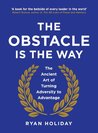
Review of The Obstacle is the Way

The Obstacle is the Way: The Timeless Art of Turning Adversity to AdvantageThe Obstacle is the Way: The Timeless Art of Turning Adversity to Advantage by Ryan Holiday
My rating: 5 of 5 stars

I enjoyed this book, even though it isn't super deep. It is not your typical self-help book. I like how Holiday pulled from so many different great thinkers and people who have done things even in the face of tremendous adversity.

Some books are great because they introduce you to other books. This is such a book. I was introduced to Lincoln's Melancholy: How Depression Challenged a President and Fueled His Greatness, which I am thoroughly enjoying; The River of Doubt: Theodore Roosevelt's Darkest Journey, which I will soon be thoroughly enjoying; among others. Also, I got a good taste of Marcus Aurelius's Meditations and the writings of Epictetus. Yeah, I know, I shoulda already read them a looong time ago, but I haven't, so leave me alone or I'm telling Mom!

If you are interested in Stoicism, or if you just seem to have an inordinate amount of hardship, this is a good introduction to the kind of thinking that can help you develop the toughness of mind to, like, conquer the world (if that is your desire); or, it can help you just to get through your normal daily pile of smelly stuff without getting too much on you.

My way of looking at the rocks and hard places that I regularly encounter has changed. When I was younger, I was more resilient; now that I'm older, I needed a little reminder that I can handle things if I have the right attitude.

If you're already perfect and resiliency is your superpower, then you can probably skip this book. If, however, you need a little refresher course on how to handle the small stuff that makes you sweat whether you want to or not, then you could do worse than giving Holiday's book a quick read.

Get yourself a copy, here:
The Obstacle Is the Way: The Timeless Art of Turning Trials into Triumph
View all my reviews

11 August 2014

Review of The Bible Unearthed


The power of the biblical saga stems from its being a compelling and coherent narrative expression of the timeless themes of a people liberation, continuing resistance to oppression, and quest for social equality.  It eloquently expresses the deeply rooted sense of shared origins, experiences, and destiny that every human community needs in order to survive. 
(Finkelstein and Silberman, The Bible Unearthed, 318)
If you’re looking for a book to bolster your beliefs in the absolutely 100% historical accuracy of the Bible, this is not that book.  That being said, the authors do respect the biblical narrative and the texts and realize their import in the lives of millions of people worldwide, calling it a “great national epic of liberation.”
… it is only when we recognize when and why the ideas, images, and events described in the Bible came to be so skillfully woven together that we can at last begin to appreciate the true genius and continuing power of this single most influential literary and spiritual creation in the history of humanity. (Finkelstein and Silberman, The Bible Unearthed, 318)
This book gently, but firmly breaks down several major parts of the Hebrew Bible (Old Testament for you Christians out there); Israel Finkelstein and Neil Asher Silberman present archaeological and historical evidence that much of the Bible was written to help coalesce the nation after several years of exile.  The Christian New Testament is not covered in this book, and partly, I believe that after chopping at the foundations, the building built on those foundations will also suffer; but, mostly, I believe it’s because the authors are Jewish and not Christian: hence, the New Testament is not their Bible.

So, I guess you could say that The Bible Unearthed actually uncovers the facts and many of the events that in fact took place, many directly opposed to what we find written in the pages of the Bible.  So, I guess you could say The Bible Unearthed unearths what happened outside of the Bible as we know it, and gives us something closer to what actually took place.  It gives detailed information, including bibliography and index and a few maps and illustrations.

Where does Biblical Inerrancy fit in here?  Some believe the Bible is 100% accurate history, science, etc.  They attempt to strengthen their arguments and their belief by going to the Bible itself.  Others have tried to manipulate archaeological and historical finds to fit what the Bible says.  At the end of the day, you just have to believe that if we were created, then God would not have given us minds that could figure things out if he didn’t want us to figure them out.  Also, if the Bible is inspired by God, and God is all-knowing (yes, I know the fancy word is omniscient), then he woulda known a looooong time ago that some smartass would come along and show how all the things written in there are not 100% accurate.  Some of those who attempt to defend the Bible forget that if there God is as powerful as they say they believe he is, he is more than capable of taking care of it himself.
  
Does that mean they are false?  NO!  It means the Bible is made up of stories which are meant to lead people to live a better life.  It was written to show people how to love and how to behave in the world.  It’s not always pretty; much of the Hebrew Bible is blood, murder, and other awfulness that one wouldn’t expect to see in a book about a God who is love.
 
I’m not trying to attack anyone’s faith, and I don’t believe that is Finkelstein and Silberman’s desire, either.  In fact, my faith was strengthened because I realized that Christianity wouldn’t be here if the Jews hadn’t pulled together and written their Tanakh (I know some fancy words, I know!  Actually, that’s an acronym for the three sections of the Hebrew Bible: Torah, Nevi’im, and Ketuvim: or The Law, the Prophets, and the Writings), and much of what I take for granted may never have happened.  I also realize that a lot of bloodshed wouldn’t have happened: i.e. the Crusades; the bloody Protestant/Catholic conflicts; the whole awful war going on in Israel and Palestine and that which is going on in the Middle East.

All the good and bad can be traced right back to that time when a group of Jewish exiles decided to put together a book for their nation, and then, use stories of their ancestors who obeyed and were blessed; and others who disobeyed and were cursed.  The blessings and the cursings all go back to those stories.  And, that is what they are: stories.

You cannot build a science on Genesis.  You cannot build a history on any of the “historical” books.  Yes, some of them have accurate depictions, but the timing is off.  The Exodus is a big one; as is the stories of the kings of both Judah and Israel. 

While this book does not cover the New Testament, I think Paul’s epistle to Timothy has probably come to mind and so, I will quote from verses 15 – 17 of the third chapter:
15 And that from a child thou hast known the holy scriptures, which are able to make thee wise unto salvation through faith which is in Christ Jesus.
16 All scripture is given by inspiration of God, and is profitable for doctrine, for reproof, for correction, for instruction in righteousness:
17 That the man of God may be perfect, thoroughly furnished unto all good works.

You see?  It says there that all scripture is given by inspiration of God.  That’s the King James Version.  The English Standard Version says, in verse 16: “All Scripture is breathed out by God …”  New International Version says: “God-breathed.”  But, notice what these verses do not say.  They do not say that everything in the scripture is to be considered 100% accurate.  Does it have to say that?  Apparently some believe it does.  I for one have read the Bible many times and have never read in its pages anything remotely saying that it’s to be taken literally.  Rather, the more I read it, the more I believe it should be read literarily.
 
Basically, this guy's up here writing this review and saying that the Bible shouldn't be believed.  I am not saying that!  I’m saying that believe it the way it’s meant to be believed.  Use it for doctrine (a fancy word for the teachings of your particular belief system), for reproof (an antiquated word which means discipline), for correction, and for instruction in righteousness.  How can one do that with literature?  People do it all the time; in fact, it’s what we have all been doing for centuries. 

Realizing that something is not the way you have believed it can be difficult.  It can stun you, I know.  But, it can be liberating, too.  It can open completely new ways of thinking and understanding.  And, once your mind has been stretched to see something, it cannot un-see it, barring permanent amnesia. 
According to the entry on Biblical Inerrancy at the Religious Tolerance website:
Belief of biblical inerrancy in the U.S.:
On 2007-MAY-25, Gallup reported the results of a national poll on Biblical inerrancy. Those polled were asked which of three statements comes closest to describing their personal views about the Bible. The average of polls taken during MAY of 2005, 2006 and 2007 were:
  • 31% believe that "The Bible is the actual word of God, and is to be taken literally, word for word." This would imply acceptance of biblical inerrancy.
  • 47% believe that "The Bible is the inspired word of God, but not everything in it should be taken literally."
  • 19% believe that "The Bible is an ancient book of fables, legends, history, and moral precepts recorded by man."
  • 3% were uncertain or didn't answer.
  • Margin of error was ±3 percentage points.
An identical poll taken during 2011-MAY showed little change:
  • 30% believe that "The Bible is the actual word of God, and is to be taken literally, word for word."
  • 49% believe that "The Bible is the inspired word of God, but not everything in it should be taken literally."
  • 17% believe that "The Bible is an ancient book of fables, legends, history, and moral precepts recorded by man."
  • 4% were uncertain or didn't answer.

Only 30% of those asked believe that each and every word of the Bible is to be taken literally.  I’m in between the 17% and the 49%: I believe that the Bible is inspired, but that it is recorded by humans.  Harold Bloom argues, in his The Book of J, that possibly parts of the Hebrew Bible (those written by one scholars call the Jahwist) were possibly written by a woman.  I like to think that that could be true: I like to hope that it is.  For more on these ideas of the “documentary hypothesis,” read this

There is a humorous take on the idea of taking the Bible literally on the Religious Tolerance site.

I love this book.  I really have to buy myself a copy, so I can spend more time going through it and its sources.  If you’re interested in the history of the Levant, the nation of Israel, the Bible, or in archaeology, or in old texts, I think you will enjoy this book.  If you don’t, please don’t throw it at me,  it is a pretty hefty tome and might do some serious damage to my spectacles. 


04 August 2014

Review of Scars of War, Wounds of Peace: The Israeli-Arab Tragedy

Scars of War, Wounds of Peace: The Israeli-Arab TragedyScars of War, Wounds of Peace: The Israeli-Arab Tragedy by Shlomo Ben-Ami
My rating: 5 of 5 stars

A thorough and well-written work on this tragic conflict, that even as I started reading this was in the media headlines, again.

Ben-Ami is Israeli, but his book is as objectively written as I have read. He doesn't give easy, pat answers to the problem; and, he doesn't try to pigeonhole the problem into this or that category. It's not all about religion; and it is also not all about politics.

He makes an effort to show how both sides have dropped the ball in the peace process, and makes no excuses for either: making it quite clear that both sides have done atrocious things to the other.

If you want to get up to date on what is happening in this critical geographical location and what has gone on before, this is an excellent place to begin.

I took a while for my first read through because I wanted the depth as well as the breadth of what was and is happening in this conflict.

View all my reviews

26 July 2014

Review of Stumbling on Happiness by Daniel Gilbert

Stumbling on HappinessStumbling on Happiness by Daniel Gilbert
My rating: 5 of 5 stars

This is an enjoyable book, at times laugh-aloud funny, but always serious. The topics he covers have been covered before, but I can't remember the last time I enjoyed reading about them so much.

Gilbert states that we often don't really know what makes us happy; that we often do things believing they will make us happy, but we misjudge because we base our future on the memories of our past. Often, those memories are unreliable. These thoughts aren't new, but the way Gilbert presents them is and it is worth the laughs you'll get to read them.

It did slow down a little toward the end, the density of the information building, but Gilbert does a good job of keeping it accessible and fun.

View all my reviews