Showing posts with label review. Show all posts

01 October 2015

Thinking Big and Cheesy Fun Stuff

David Schwartz's The Magic of Thinking Big is good pep-talk stuff, and it's funny in a corny way. Maybe it's the age of the book, maybe it's just me. Some of the concepts are familiar from other self-help books. Because they copied Schwartz, right? That's probably what he'd say. 
;-)

I listened to the audiobook and had some extra fun listening at slower speed. It made the author sound like he was three sheets to the wind, and it was that much funnier because he's also trying to sound serious and profound. It helped me remember those parts....

There are a few other narrators. Some do pretty well, others sound like they're reading, which they are ... so I guess that's okay? Just sometimes it tends to pull me out of the book.

And but so, a couple of concepts I don't fully agree with, which doesn't mean they're wrong. I may agree with them tomorrow. And, his illustrations aren't always PC. I don't care so much about that, but I'm more sensitive to those things than I used to be. That isn't stopping me from getting the good stuff out of this audiobook. Some of which can be used immediately.

I don't think The Magic of Thinking Big is for everyone. For example, chihuahuas wouldn't get much out of it, since they already think they're bigger than elephants. Almost anyone else can probably get at least one useful idea out of it and, often, that makes it worth the time to read or listen. I was reminded of several tools which I had sorta forgotten about, so I'm glad I listened to this audiobook.

In the end, you have to decide if you like it or not. Don't let others choose what you read. That's part of thinking big and being in control of your life: deciding what you want/need to read.

Benjamin Disraeli said, "Life's too short to be small."

So, go live big!

The Magic of Thinking Big was recommended by Tim Ferriss (fourhourworkweek.com).

08 June 2015

Review of Barry B. Powell's Translation of Homer's Odyssey

There is one place in book eight that was confusing. Odysseus gives Demodokos a prime cut of meat, but the herald hands him a lyre. The other translations have the word gift, not sure how Powell got lyre there, but it is obviously supposed to be that gift of meat from Odysseus.

I'm a little put off by the typos and grammar gaffs in both the translations of this and The Iliad. And the indicators of nonexistent footnotes.

Since, overall, this is an excellent translation, I was able to overlook these picayune matters. I don't think I will actually purchase this or The Iliad until later editions when I'm hopeful the typos, etc., will be fixed. I don't buy the excuse that editors are busy. They can afford to hire proofreaders. And, how did all the early reviewers miss those things that I stumbled over and nearly came to a full stop at?

This is a wonderful translation and does deserve a place among the other modern/contemporary translations. Because of that, it also deserves a better job on the editing. Who is culpable here? The publisher? The translator? The editor? I guess I'm not finished....

It just is beyond my small intellectual capacity to understand how such an important book (couple of books, actually) can be released in such a state. It's like letting the king go out in his underclothes. We're floored by the intimacy of those things; we expect majesty; we expect royal robes worthy of the office. Even if these translations are for modern readers, we expect spelling and grammar fit for the work.

Even if it was not Homer, how hard is it to get someone to proof the thing? Would you send your children out to school in rags? I think some in our day would.

Okay, I'm finished with my rant.

09 April 2015

Review of The Boy Who Harnessed the Wind by William Kamkwambe

An inspiring and poignant story about a young man's thirst for knowledge, and drive to improve the lives of his family and neighbors.

William Kamkwambe, recognizing the need for knowledge and having a hunger for learning, studied on his own, often walking many kilometers to get books. He spent many spare moments, when not working the fields with his father, learning and experimenting.

He began his experiments with little formal education, proving that it's not the educational system that holds people back, but small dreams and little action. William Kamkwambe was committed to his dream, and his inventiveness and resourcefulness show that to succeed you must use what you have and keep working to get what you need.

Like all inventors and innovators, Kamkwambe had setbacks and failures. Somehow, he had learned that these things meant: try a different way.

I hope you'll read this book and I hope it inspires you to look for creative ways to make life better for you and others.

31 March 2015

Review of Barry B. Powell's Translation of Homer's Iliad

I'm overwhelmingly grateful that Barry B. Powell did not use the word 'careering' in his translation of Homer's Iliad. That word jarred me all through a previous translator's translation (name withheld to protect my own backside). It is an ugly, unfortunate word which in my mind wars against its very definition. It was like riding with a driver who slams heavily on the brakes at every stop: annoying and exhausting. Perhaps I'm overreacting, but this is my review, so I think that is my prerogative. Right? Well, anyway, back to Powell's welcome translation.

Apart from a few typos (The funniest is when 'gods' is put in for 'dogs' in book 24 line 402, which makes it sound like the gods eat humans. Wrong religion, I think.) and at least one place where a footnote is indicated but nonexistent (22.327: 'knees'), and a few notes which a quick glance at a few other translations would solve -- (the most troublesome example is book 24 lines 44-46. Here Powell translates the Greek αιδως as 'respect,' which I think really only works in it's old connotation, i.e. and e.g. the phrase from the King James Bible: "God is no respecter of persons" (Acts 10.34). In that way, i.e. respecting another's opinion of you can cause harm. (For a more thorough look at this idea, read: Bertrand Russell's The Conquest of Happiness, where he writes: "... the respect of their neighbors depends upon their possession of a good car and their ability to give good dinners....") The other translations I looked at chose to use 'shame,' which makes it more evident how it can harm as well as help.) -- this is a wonderful translation. It is easy to read and the copious notes make it a valuable addition to any Homeric geek's bookshelf.

There are several places, marked in the text by a speaker icon, which are read by the author. These recordings can be found at the book's website. Unfortunately, this feature is not mentioned in the actual book; I had to dig around online to figure it out. It would have been quite easy to mention it in a footnote, or in the introduction. I can only assume that this was another overlooked and forgotten footnote. Still, I haven't listened to the recordings, so ...

I am partial to Lattimore's translation, but find Powell's enjoyable and refreshing; if that can be said about such a bloody and violent work. I try not to let those themes keep me from the other, more interesting and pertinent themes for our time. A new translation of Homer's Iliad only serves to show the continued importance of this classic. Of course, as usual, not everyone will agree with that. That's okay. Without the strife of disagreement, the friction necessary for growth would be missed.

I plan to reread and reread Powell's wonderful translation. I hope you will read it at least once and decide for yourself if you like it or not.

29 August 2014

Review of Ping Fu, Bend, Not Break

Bend, Not Break: A Life in Two WorldsBend, Not Break: A Life in Two Worlds by Ping Fu
My rating: 4 of 5 stars

Ping Fu shares her harrowing journey from childhood through her beginning her own business and family. She experienced terrible things, and good things and she tells how these experiences shaped her worldview and her ability to bend without breaking.

There were parts of the book that were slow reading and lost my interest, but overall, the work was enjoyable and well worth the time it took to finish it.

Ping Fu is a courageous and strong woman who was able to aim for what she wanted (and it one case what she didn't think she wanted, but did) and to reach her goals.

If you're interested in entrepreneurship, women entrepreneurs, cultural differences between China and America, Chinese-Americans, or developing resilience in life (i.e. learning to "bend, not break"), you should enjoy this book. But, you won't know unless you read it for yourself....

View all my reviews

Creative Commons License
This work is licensed under a Creative Commons Attribution-NonCommercial-ShareAlike 4.0 International License.

26 July 2014

Review of Stumbling on Happiness by Daniel Gilbert

Stumbling on HappinessStumbling on Happiness by Daniel Gilbert
My rating: 5 of 5 stars

This is an enjoyable book, at times laugh-aloud funny, but always serious. The topics he covers have been covered before, but I can't remember the last time I enjoyed reading about them so much.

Gilbert states that we often don't really know what makes us happy; that we often do things believing they will make us happy, but we misjudge because we base our future on the memories of our past. Often, those memories are unreliable. These thoughts aren't new, but the way Gilbert presents them is and it is worth the laughs you'll get to read them.

It did slow down a little toward the end, the density of the information building, but Gilbert does a good job of keeping it accessible and fun.

View all my reviews

Review of The Tools by Phil Stutz and Barry Michels

The Tools: Transform Your Problems into Courage, Confidence, and CreativityThe Tools: Transform Your Problems into Courage, Confidence, and Creativity by Phil Stutz
My rating: 4 of 5 stars

I am working through The Tools: 5 Tools to Help You Find Courage, Creativity, and Willpower--and Inspire You to Live Life in Forward Motion a second time. Initially, I thought that a lot of what Barry Michels and Phil Stutz teach here seems very New-Agey. After thinking about the Tools, I see that the Tools have cognates in Buddhism (esp. Tibetan Buddhism as it has come to North America). Active Love can easily be related to the practice of Tonglen: giving and receiving. A person first must receive love before it can be given.

Okay, you can say: "That isn't real, you're not really giving anything to anyone." I have to agree with that. I'm reminded of Elizabeth Gilbert and the "sending light and love" idea she writes about in Eat, Pray, Love. Even if you don't believe that you are sending actual love to someone, that is not the point. The point is: You are practicing loving that person; if you love someone, you have a harder time being angry (or sad, vindictive, or any other negative emotional state) toward/about that person. I have used Active Love more than any of the other Tools in this book and I can say that it has made it easier for me to stop renting space to those people who have "done me wrong." We often give too much thought to those people we dislike. I have no idea why. But, if you're like me, i.e. sick of doing that, then you'll read this book and use these tools to STOP DOING THAT!!!

What these tools do (only if you use them and use them use them) is give YOU more control over what YOU focus on. And, that is what the last tool focuses on: how to keep yourself using the tools. The authors say that these are not magic pills that you can use only once and then forget. Like anything that really matters, you will have to work at making the changes you want to make in your life.

Barry Michels writes that he was skeptical about the Tools initially, too, but that as he kept using them he realized how much they were helping him. Yes, there may be a time of uncomfortable repetition, but eventually the lack of faith is overcome by belief; and any self help program requires some degree of faith (in my humble opinion).

The authors recommend really sticking to the program, really giving it your all; they recommend not trying them once and then, immediately jumping on to another program and then, to another. As the writers argue is what is often done in consumerist societies: always looking for a magic pill, whether it's weight-loss, money-making, time-management, or whatever.

I have had some success with these tools. Does that mean that you'll have success with them? I have no idea. As usual, all I can say is: read it and use them and see for yourself.

Get yourself a copy, here:
The Tools: 5 Tools to Help You Find Courage, Creativity, and Willpower--and Inspire You to Live Life in Forward Motion

View all my reviews

13 July 2014

Review of Don Miguel Ruiz's The Four Agreements

The Four Agreements: A Practical Guide to Personal GrowthThe Four Agreements: A Practical Guide to Personal Growth by Miguel Ruiz
My rating: 5 of 5 stars

A simple, but not simplistic, twist on personal growth and self-help. Several times the author states that is takes a strong will to make and keep these four agreements. The beauty is that they are things that we should be doing anyway.

If you're interested in self-help, personal growth, or just plain, good wisdom, then I recommend this book. But, be careful: you may find yourself making some serious agreements with yourself that will change your life.

View all my reviews

04 July 2014

Review of Bonhoeffer: Pastor, Martyr, Prophet, Spy

Bonhoeffer: Pastor, Martyr, Prophet, SpyBonhoeffer: Pastor, Martyr, Prophet, Spy by Eric Metaxas
My rating: 4 of 5 stars

Overall, I enjoyed this biography. As I read/listened to it, I kept trying to connect it to what I know of Church history and history in general from this time. It was fascinating to learn new things about the Nazi party, such as: they started their own Church: Reichskirke (officially: The German Evangelical Church).

Metaxas shows the many sides of Dietrich Bonhoeffer and does an excellent job of bringing the young pastor's internal and external struggles to the reader. Many people played many roles in the stand against Hitler's Nazi party during those years in Germany; it's interesting to see what role those leaders in the Protestant Church (particularly Lutheran) played.

Bonhoeffer and many of his friends and colleagues were punished and killed for their role in the downfall of the Third Reich.

If you're interested in the Lutheran Church, Church History, History before/during WWII, or the role played by the Church during the Nazi Third Reich, this is an interesting place to begin looking at those various topics/subjects.

As always, you'll just have to read it to discover if you'll like it or not.

View all my reviews

25 May 2014

Early Review of Richard Jackson's Confessions of a Terrorist: A Novel

Confessions of a Terrorist: A NovelConfessions of a Terrorist: A Novel by Richard Jackson
My rating: 5 of 5 stars

Advanced Reader's Copy Review:

The night I began reading Richard Jackson's Confessions of a Terrorist: A Novel, I didn't stop before finishing a third of it, it was difficult to put it down. Part of this is the style, it is written in the format of a Top Secret transcription of an audio or video recording of an interrogation of a MI5 agent and a terrorist/militant. There are no chapter breaks, so it's easy to just keep right on reading and the content makes it hard to simply close it and put it down.

Jackson, with this novel, seeks to shake up his readers' preconceptions and notions concerning those labeled as terrorists by the media. That seems to be one of his few aims: to show that those so quickly tagged as terrorists are human beings, having people they love, who love them; and who want people to hear them. Jackson writes: “I have rarely found artistic or media depictions of terrorists that seemed authentic or which corresponded to the completely normal, often intelligent, complex and committed people I had personally spoken to” (319). He presents the terrorist in this light; i.e. the opposite of the way they are usually presented in films and the media.

The author wants to put the readers in the room during the interrogation, to help them ask tough questions. Jackson lives up to his goal, stated on the jacket copy, to blur the line between the interrogator and the terrorist. There are passages that could catch readers nodding their heads in agreement and then, catch them feeling a twinge of guilt for doing so.

I read that it is in the style of Mohsin Hamid's The Reluctant Fundamentalist. I agree with that in that it is a story that takes place in an intense conversation between two characters: one a Westerner, the other a suspected terrorist. There the similarity breaks down. Jackson's novel is presented as a trascript (as I've already stated), with anotations by those higher up the chain of command; annotations that the fictional authority writes to convince others to expunge parts of the recording and the transcription to cover their collective backsides. Jackson recommends those who are inclined, should try to find as much information as they can, and to talk to militants, if possible.

If you enjoyed The Reluctant Fundamentalist, or are interested in a different perspective view on the issue of terrorists and their behavior, I highly recommend this novel. The author writes, “A novel like this is a small step, but a necessary one, to tearing down the veil of ignorance which currently lies over most of what we currently say and do about terrorism” (322). He also includes a suggested reading list for those interested in knocking down that “veil of ignorance.” I plan to re-read this novel, and to work my way through Jackson's "Recommended Reading" list on terrorism and terrorists.

View all my reviews

Get the Kindle version, here (the hardcopy is due out 3 June 2014):
Confessions of a Terrorist

04 May 2014

Review of Heretics: The Creation of Christianity from the Gnostics to the Modern Church by Jonathan Wright

Heretics: The Creation of Christianity from the Gnostics to the Modern ChurchHeretics: The Creation of Christianity from the Gnostics to the Modern Church by Jonathan Wright
My rating: 5 of 5 stars

This is an informative book, well-written and with an easy to read style/voice. It's good enough that I plan to re-read it, hoping to get even more out of it. I'm very interested in Church/Christian History as a whole, but especially enjoy reading history from an objective perspective. I don't get the sense that I'm reading a particular brand of Christianity's history, or even a history with too much slant on it, i.e. it’s not making up my mind for me, but simply presenting information and allowing me to think and make conclusions for myself.

According to Wright without heresy, orthodoxy may never have been solidified. He writes, “Heresy certainly helped define orthodoxy, but it still required a bold leap to equate that orthodoxy with the only reputable version of Christianity” (82). This last statement is a thought I have often had, but have not been able to put into words as clearly as Wright does. Wright is not giving a prescription, here, but rather a description. Again, he lets the reader come to their own conclusions.

Wright presents representative arguments from all sides before, during and after the seemingly all-important councils. The arguments on the Trinity vs. Unitarian concepts; the god-nature vs. human nature of Jesus Christ. He discusses how the Holy Spirit slowly changed from an almost afterthought to one third of the Trinity. He gives information on the various heresies and the people who were accused of holding them and what happened to them. And, as Wright states, “we are reminded that the line between orthodoxy and heterodoxy was always very thin” (104). This is even more true today.

According to others (e.g. Ross Douthat) heresy is now almost the norm, having overcome the most staid and staunch orthodoxy. Wright takes a different thought, writing that “[i]t is hard to reach a firm conclusion. Was there really more heresy during the medieval era, or simply more attempts to seek it out and eradicate it?” (135). I tend to be between the two ideas, that there is heresy. I think it’s prominent because of modern knowledge (particularly scientific knowledge). In order to keep people interested, the leaders in churches have to avoid deep theological issues. In order for people to feel congruent, they have to hold unorthodox ideas. Some orthodox concepts are quite hard to jibe with what is experienced on a daily basis. I have a feeling that most of what we call Christianity, today, would have been considered heresy in the Middle Ages. Wright may agree. He writes, “There was no more conspicuous example of medieval Christianity’s inability to neatly define the borders between heresy and orthodoxy than the Beguines, who were welcomed, at first, by paeans of support and ended up being thrown into the flames” (142).

One good thing about the tolerance of/freedom of religion we enjoy, at least in most Western countries, few are dying for their unorthodox beliefs and thoughts. “It has recently been calculated that, across Europe in the sixteenth century, as many as five thousand people were legally executed for their supposedly heterodox religious beliefs” (Wright 181). That is progress, but others (again, Douthat) seem to bemoan this change. I’m probably reading to much into those ideas, but I prefer heresy to mass killings of supposed heretics.

Wright also presents the concept “In one of the more notable plus ca change moments of European history, the persecuted quickly became the persecutors” (187). This continued throughout church history.

I appreciate how Wright gives equal ink to both sides of the issue; he keeps a pretty objective voice throughout and makes it easy for the reader to come to their own conclusion. He also has a good scholarly apparatus: i.e. notes, bibliography, index.

I thoroughly enjoyed this book and recommend it highly. If you are interested in history in general or Church/Christian history in particular, this is an excellent book to increase your knowledge of this subject.


View all my reviews

25 April 2014

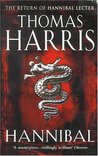
Review of Thomas Harris' Hannibal

Hannibal (Hannibal Lecter, #3)Hannibal by Thomas Harris
My rating: 5 of 5 stars

I kept putting off reading this, because I was afraid of being disappointed after having seen the film. I was NOT disappointed! It was very difficult to put down, and even though I was familiar with the plot and everything from the film, I still found myself wondering how it was going to turn out.

My desire to read this at this moment came mostly from my current writing project. I need some creepy bad guys, and of all in literature, film, etc., Hannibal is one of the first to come to mind in a tie with Cormac McCarthy's creepy creation: Anton Chigur in No Country for Old Men.

Looking forward to reading the rest of the Hannibal Lecter novels and hope they are as much of a charge as this one was.

View all my reviews

19 April 2014

Review of Robert Wright's The Moral Animal

The Moral Animal: Why We Are the Way We Are: The New Science of Evolutionary PsychologyThe Moral Animal: Why We Are the Way We Are: The New Science of Evolutionary Psychology by Robert Wright
My rating: 5 of 5 stars

I was introduced to this book during a course on Buddhism and Modern Psychology. Wright covers a lot of ground in this well organized and tightly written book.

Wright doesn't hand down laws, saying "This is how it is," but rather leads with questions and tries to work out the answers based on Darwinian Natural Selection. This is not an easy task; so much is not available when examining the world from a purely materialistic point of view. When one is not allowed to give credit to supernatural, or even non-biological mental events, it really demands a serious and deep interrogation of the biological, chemical, and other physical causes of why people do the things they do. Wright uses several events from Darwin's life as examples, and in doing so makes both evolutionary psychology and Darwinian Natural Selection accessible to his readers.

If you're interested in morality, Darwin, evolutionary psychology, or why people do what they do, this is an excellent read.

If you're not interested in those topics, it's STILL and excellent read! I highly recommend it.

View all my reviews
18 April 2014

Review of Joshua Foer's Moonwalking With Einstein

Moonwalking With EinsteinMoonwalking With Einstein by Joshua Foer
My rating: 5 of 5 stars

Foer uses several examples of how these mnemonic techniques work, and compares/contrasts them to those few people who have unexplained super-memory because of brain damage or brain syndromes. He investigates and includes stories about several people who have such syndromes and are able to do amazing things with their memories, or in some cases, can't remember anything after a few seconds: i.e. they can't develop long-term memories.

Joshua Foer participates in the U.S. memory competition, being trained by one of the top Mental Athletes, as they are called.

Several mnemonic techniques are explained and shown through example. It may be a jump between some of these techniques and real-world application of them, but many can be used immediately in "the real world."

It was a fun read/listen, and if you're interested in the memory, memory competition, mnemonics, memory palaces, or anything like that, I recommend this book. Even if you've read Tony Buzan, Harry Lorayne, Gary Small, Cicero, and others' books on memory, this is a new view on an ancient topic.

Enjoy.

View all my reviews

Get yourself a copy, here:
Moonwalking with Einstein: The Art and Science of Remembering Everything

15 April 2014

Review of Michael Krasny's Spiritual Envy: And Agnostic's Quest

Spiritual Envy: An Agnostic's QuestSpiritual Envy: An Agnostic's Quest by Michael Krasny
My rating: 4 of 5 stars

Krasny asks a book long question (that I shared to some extent), and asks the reader to join the question; he invites the reader to seek along with him. It's probably safe to say that not all agnostics feel the way he feels; but, questioning comes with the territory, I think. Krasny doesn't claim to know the answers. I really appreciate that in this time of such overpowering (sometimes almost nauseating) certainty: in both the believer and atheist camps. Certainty eludes me, as it eludes Krasny, and he isn't afraid to share his uncertainty and what he is doing in spite of it.

Lately, I've had some slight envy, similar to what Krasny writes about, and questions of how to be the best person I can be in this life I have. I don't believe religion is necessary for morality, but I can see how it has shaped morality, mores, and ethics in different societies and for individuals within those societies.

What I miss is the camaraderie that I enjoyed when I was a practicing Christian and that is the envy I have for those who are confident and solid in their faith. Occasionally, I envy the comfort that would come with certainty, but then I remember that if I were certain, I would not have the curiosity to keep my mental hunger fed.

If you are interested in how some agnostics think, this book can help you ask the kinds of questions to find your own way, without telling you how you should think or believe. Read it and see what you think.


View all my reviews

Get yourself a copy, here:
Spiritual Envy: An Agnostic's Quest

13 April 2014

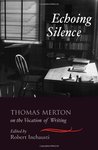
Review of Thomas Merton's Echoing Silence

Echoing Silence: Thomas Merton on the Vocation of WritingEchoing Silence: Thomas Merton on the Vocation of Writing by Thomas Merton
My rating: 4 of 5 stars

I enjoyed this book, but didn't get a lot out of it as far as the "vocation of writing" is concerned. It is more memoir-ish, dealing with Merton's own vocation. And that leads to another concept: I think it has to do with his vocation to be a Catholic monk and a writer. Vocation in the narrower/earlier sense: i.e. a calling, rather than the more broader/more current sense of a career/job. And I really expected more about writing itself--as a skill/practice. There is some of that, but as you probably realize (and I missed) is that it deals more with being a Catholic monk, contemplative, and a writer in the world, in the context of readers and fellow-writers, etc.

That being said, there are a few ideas and concepts that are important across the board for writers from any lifestyle. So, that begs the question: is it worth reading to get those few nuggets that one may find in other books on writing? I guess that depends on the potential reader's interest.

If you're interested in Christian writing/writing as a Christian: yes
If you're interested in Thomas Merton's writing in general: yes
If you're interested in being a monk and a writer: definitely
If you are simply interested in becoming a writer: there's probably a better book out there, but that doesn't mean you shouldn't read this one....

The things I like most about this book is that it is a sort of anthology, with parts taken from several of Merton's books, so it's an introduction to his writing while trying to focus on the vocation of writing. There are a lot of good thoughts within the pieces included. Thoughts on life and on living, but that are (imho) not that pertinent to writing.

I recommend this book and hope you enjoy it as much as I did. But, if you're looking for a book on how to be a writer don't expect too much.

Echoing Silence: Thomas Merton on the Vocation of Writing

Get yourself a copy, here:
Echoing Silence: Thomas Merton on the Vocation of Writing

View all my reviews

11 April 2014

Review of Susan Cain's Quiet

Quiet: The Power of Introverts in a World That Can't Stop TalkingQuiet: The Power of Introverts in a World That Can't Stop Talking by Susan Cain
My rating: 5 of 5 stars

Excellent book. I think every parent, educator, .... actually, every human being should read this. If you are an introvert, it will help you understand yourself better. If you are an extrovert, it will show you ways to strengthen your relationships with introverts.

View all my reviews
Get your copy here:
Quiet: The Power of Introverts in a World That Can't Stop Talking

09 April 2014

Review of Ellipses ... by Danel F. Griffin

EllipsesEllipses by Danel F. Griffin
My rating: 5 of 5 stars

This is a fantastic debut novel. It has travel, adventure, literature, the Marx brothers and philosophy for good measure. It's been a while since I read it, and until I get my books out of storage, I won't get a chance to re-read it, but I just realized that I never wrote a review back then.

Griffin has a fresh voice and an interesting writing style. There is one chapter that just keeps fighting it's way back into my remembrance, and when you read it, you'll know which I mean (that's right, no spoiler alert!)

The characters were well written and could have been friends of mine from my college days; the situation and action are believable and shows Griffin's love of film by being very cinematic, i.e. it was very easy to visualize the things happening in the scenes. And, it was difficult to put down.

The best advice I can give is: read it and see what you think.


View all my reviews
Get a copy here:
Ellipses
and Danel's second novel:
Spiral's Edge

31 March 2014

Review of Understanding the Mystery of the Cross

Understanding the Mystery of the Cross: We Died at a Tree; God Gave Us Life at a TreeUnderstanding the Mystery of the Cross: We Died at a Tree; God Gave Us Life at a Tree by Mike Beecham
My rating: 5 of 5 stars

This is a well-written book on a very important area of Christian theology; it's also a great contribution to Christian theological writing, overall. While the topic/teaching is deep, Beecham clearly expounds on the meaning of the Crucifixion, and what that means for the Christian in their everyday lives and in the idea of salvation.

Mike Beecham writes with clarity and authority, developing this teaching and making it accessible to any reader while maintaining orthodoxy. I hope to see more books from him in the future.

I would recommend this for anyone interested in an excellent explanation of the Crucifixion and what that means in overall Christian theology/doctrine and belief.

View all my reviews

Visit the book's site for more info or to get a copy: Understanding the Mystery of the Cross
Update! The book is available on Kindle, now!
Get a copy here:
Understanding the Mystery of the Cross

21 March 2014

Review of Devil's Highway

Devil's HighwayDevil's Highway by Luis Alberto Urrea
My rating: 5 of 5 stars

So many in the US complain about illegal immigrants, while forgetting that their ancestors once came to this country uninvited. And most of those who come, now, really don't want to; they have family back home and many of them can't find jobs, because the American corporations have pulled out and left few jobs and those that are available are worse than minimum wage here. Sadly, many of those who try to come to the US die in their search for a better life for them and their families.

This exposes the selfishness that often comes with abundance that many US citizens enjoy. All of us can gain perspective by thinking about the ordeals our ancestors went through so that we could enjoy freedom of religion and the abundance available in this country. And, in truth, there are people in this country who are so far from that abundance that they can't even afford to see it on TV. It's not helping them to keep the immigrants out. They don't have access to the jobs the immigrants are out for. The world is screwed up enough without our complaining about people trying for a better life. Many who complain, however, try to lump all illegal aliens into one group: drug and human traffickers.

I'm reminded of the way German-Americans, Japanese-Americans were treated during WWII, and the way many people of Middle Eastern descent were treated (are still?) after 9/11. It's fear--xenophobia! And it is sad and disgusting. Especially when it is those who are simply trying to pursue happiness or a little less sadness, or even a little more to feed, clothe and house their family.

These immigrants often die in a horrible way, crossing Hell trying to reach the Promised Land which despises them for no other reason than they aren't from here.

Yes, the drugs and crime are often part of it--but, NEWS FLASH! drugs and crime have been part of the culture of the US for a loooong time and it does NOT depend on illegal immigration to keep going.

This book gives names to a few of the hundreds that try to find a better life, it gives the outsider a view into the lives of the kinds of people they are, how they live, how they want what everyone wants: happiness and the chance to take care of their families. I can't imagine anything closer to Hell on Earth than what all these desperate men endured and what lead to many of them to their deaths. Luis Alberto Urrea also shows how our jobs are not really in danger of being all taken away by illegal immigrants; he gives the whole thing context in which to come to our own ideas about border crossing and immigration.

If you are interested in what goes on on the Mexican-American border; in what often happens to the people who try to cross into a better life; or in ways all this is handled by our respective governments, and what that means for citizens of both countries; this is a good read to has a few answers, while at the same time putting a face on the brave and desperate people.

View all my reviews
Get a copy here:
The Devil's Highway: A True Story