02 May 2014

Review of Living Beyond Terrorism by Zieva Dauber Konvisser

The first thing that I noticed and something that kept coming up is that the book is a testament to “the strength of the human spirit” (xxiii).  Another recurring thought is that of resilience.  I will attempt to write this review without giving away too much of the book.  There is just so much that touched me and I want to do the work justice.  It is an important book and I hope it gains a wide readership.  It’s a book about hope and healing, and that is for anyone. 

Konvisser has an wonderful writing voice; while her book is well-researched and scholarly, the style and the voice keeps it accessible for the lay reader.  In my humble opinion, she does an excellent job of writing a book for both audiences without skimping on either side.  She also includes representatives from several groups of people: Jewish-Israelis, Arab-Israelis, and others from other countries who have made Israel their home.  While presenting the stories of these people, she attempts to keep it about them and how they have coped with, and how their lives have changed since, the traumatic events of terrorist attacks; she attempts to keep the book from being political.  And, she does a pretty good job of that, too. (xxxiii)

Konvisser wants to make it clear, by letting these people tell their own stories, that these survivors are human beings, not merely numbers we hear on the evening news.  Real people with hopes, dreams, loves, worries, fears, and lives and people who love them and whom they love.  She writes: “By telling and retelling their stories, we celebrate their lives as people—as human beings—not simply as players in a larger story or as numbers.  By telling their stories we bear witness” (xxvii).  The book is an anthology of the stories of not victims but, survivors (this is an important distinction for them) of terrorist attacks: which include shootings, car bombings, and suicide bombings.  Konvisser considers this text, this work, as a tribute and a responsibility. 

It seems that those in this area of the globe, are experiencing something similar to the state of the United States before the Civil Rights Movement in the 1960s.  Violence obviously is not working, and maybe they should try non-violence.  This book could be helpful in establishing the dialogue that can bring these two groups of people closer to peace. There is a bulleted list of “Lessons Learned” in the preface, which according to the author was developed from all the stories of the survivors and of the bereaved.  I won’t include it here, but recommend the reader to not skip the preface and so miss this important part of the work.

It’s not just Jewish-Israelis who are the victims/survivors; the Arab people living in this area also suffer: some are killed, some maimed and many are treated like criminals just for being Arab and being in the area of a terrorist event.  So, their trauma is double maybe even tripled or quadrupled.  While most of the people’s stories talk about the post-traumatic stress that they suffered, they also depict post-traumatic growth.  This latter, the way I understand it, would be like a kind of awakening brought on by the trauma and the recovery from it.

Even in the midst of the terrible events and the subsequent recovery, most of the stories presented here show amazing amount of hope.  The survivors talk about people asking why they keep living there, to which they answer, “This is my house and my family…” In a sense, “How can I leave my home?”  These survivors realize what’s important: family, friends, sense of place and belonging, and not letting the terrorists win. (264)  The survivors also talk about increased gratitude, along with a fear of returning to the place of the attack. (266)  This realization of what’s important and gratitude are also recurring concepts in these stories.

For the Arabs, there was a distancing by Jewish colleagues and a feeling of being under suspicion. (21) This is unfortunate, because the survivors were just as much targets of the terrorist attacks as their Jewish counterparts.  After years, they still struggle to deal with the after-effects, trying to be strong. (23)

The take-home seems to be that even if we never have the misfortune of experiencing a terrorist attack, we can learn ways of thriving when we face other traumatic events, or loss. (262)  Somehow, the perpetrators and retaliators have to realize that the violence is not solving their issues.  It seems the terror works for a short time, but only a short time.  The survivors will not let the fear win, so the terrorism loses its venom.  As one survivor says, “I had a new chance, a new life, to be more or less whole” (41), and “In the beginning it has to destroy you in order for you to survive” (42). 

This is a book about surviving, and in many cases flourishing, even after being involved in some of the worst events a person can imagine: terrorist attack.  The atrocities take their toll, but the survivors, at least those who share their stories here, come out stronger and with a great appreciation of life. 

I highly recommend this book to anyone interested in terrorism and dealing with it; trauma and healing after trauma; war and survival.  It has given me a new perspective on my own problems, making them seem almost non-existent in comparison.  However, neither Konvisser nor the story-telling survivors ever trivialize the trauma of others.  They demonstrate that it is significant and people can get through it.  I hope many readers find hope in this book, or at the very least, that they gain a new perspective on the world around them.

01 May 2014

Making a Life That Matters

Sometimes I wonder if my life simply matters because it is, or if I have to DO certain things: you know, achieve GREATNESS!!!: to make my life matter. 

I hold to the idea of a certain innate human importance: i.e. human beings matter simply because they are.  That’s not really what I’m talking about here; this isn’t one of the questions I’m asking of myself.

My question is more about life as it’s lived; the life situation (as Eckhart Tolle calls it).  You know: career, hobbies, exercise, learning, relationships.  What is really important?  What really matters?  Am I supposed to be happy with my life as it is, as many of the self-help gurus say?  Am I supposed to realize that I’m really deeply unhappy and so I have to DO all these special steps to find happiness?

When I read Cormac McCarthy’s The Road the first time, I immediately had an interpretation of the meaning of that book.  It was: The Road is about focusing on what’s important. 

Later, I arrived at more elaborate interpretations, but that initial focus on what’s important idea has stood the test of time.  For the man (in case you haven’t read it and plan to, I’ll try to keep the spoilers to a minimum) who unnamed, the boy is “what’s important.”  Everything in the story deals with keeping that boy alive, or to die trying.

Since reading that novel, I have often thought about my own children and how important they are to me.  I’ve thought about the other members of my family and how they are also important to me.  I look at what I have (of course, if someone else had what I have they may not experience gratitude, but rather despair) and am grateful. 

So, what is really important?  Air to breathe.  Water to drink.  Food.  A roof over my head.  All of those things are nice to have, esp. the three basic needs: and those are also covered in McCarthy’s book. 
Ultimately, what is the most important thing?  It’s not really a thing at all.

I read a lot of literature and it is important to me.  I often get very informative answers from literature, and mind-saving info, too.  There have been a number of times that I have read a certain passage from a novel or play or poem and it has given me a new perspective on life.

Yet, literature is not the most important thing, either.  Although literature often contains a portrayal of it, or an attempt at it. 

The most important thing is love.  There, I said it.  I’m not talking only about love between a man and woman, because that is only one narrow aspect of love and is often misunderstood (that’s the stuff for a-whole-nother post).  I’m talking about love that is willing to give itself completely.  Sometimes the love between a man and woman is like that, but more often that kind of love is the love of a parent for a child.  A love that would die, fight, scrape, do whatever to make sure that child is safe and will grow to be the best human being he or she can be.  That’s the kind of love I saw that the man had for his son in The Road.

So, what does that have to do with a life that matters?  Everything.  Everything and more.

Socrates supposedly said that the unexamined life is not worth living.  That may be true, or it may not.  But, if we don’t examine our lives we will have a difficult time building one that matters.  That’s not to say that we have to run off to every self-help seminar, or buy every book and CD/DVD program at the local bookstore on 23 Steps to Super-Over-Mega-Achieving Every Single Goal in Your Stupendous Mind, or something.  What it means is that we take stock.  We really look at what we believe about the important things.  We then have to get down to the real thing: What is really important?

Now, we’re right back where we were up there ^.  The important thing is love.  It’s important that we rebel against the “natural” instincts and that we love, have compassion for our fellow human beings.  If we can get to the level/degree of the love a parent has for a child (those few exceptions notwithstanding), that’s great.  The thing is, we have to begin.  We have to begin wherever we happen to be.  It’s like that old film says: “Baby steps.” 

This isn’t a command. I have no authority for such things.  From me, it’s just a suggestion and a thought about what’s important.  Now, if you happen to be Christian, then, you do have a command to love… Sorry, I can’t be held responsible for that. 

Joking aside, how much better would our world be if everyone just began to love one another a little more than they do now?  Just try to picture it.  Just try to imagine it.

I hope this doesn’t sound preachy.  That was/is not my intention.  I’m merely thinking aloud, so to speak, and hope that you will think along with me on this important issue.

Over the years I have walked many different paths: some exclusive, some inclusive.  Now, my heart is heavy because I miss people from all the different walks of life I have been in and as I age on the outward plane, I grow to realize the truly important thing can also be an urgent thing.  The trick, I think, is to not let it become an overwhelming thing.  People are important and relationships with people we care about are important.  Love is the most important thing.  It is the better thing. 

Please remember to tell the people who you find important, how important they are to you and how much you appreciate them. 

Now, say, “Yes, mother!” and go do it. :-)

Peace!

25 April 2014

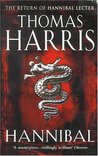
Review of Thomas Harris' Hannibal

Hannibal (Hannibal Lecter, #3)Hannibal by Thomas Harris
My rating: 5 of 5 stars

I kept putting off reading this, because I was afraid of being disappointed after having seen the film. I was NOT disappointed! It was very difficult to put down, and even though I was familiar with the plot and everything from the film, I still found myself wondering how it was going to turn out.

My desire to read this at this moment came mostly from my current writing project. I need some creepy bad guys, and of all in literature, film, etc., Hannibal is one of the first to come to mind in a tie with Cormac McCarthy's creepy creation: Anton Chigur in No Country for Old Men.

Looking forward to reading the rest of the Hannibal Lecter novels and hope they are as much of a charge as this one was.

View all my reviews

Review of Robert Kurzban's Why Everyone (Else) is a Hypocrite

Why Everyone (Else) Is a Hypocrite: Evolution and the Modular MindWhy Everyone (Else) Is a Hypocrite: Evolution and the Modular Mind by Robert Kurzban
My rating: 5 of 5 stars

This is an excellent book on the modular view of the mind. I particular enjoyed the chapters on deception and self-deception.

If you're interested in evolutionary psychology, this is a great book to start an investigation of the subject.


View all my reviews

19 April 2014

Review of Robert Wright's The Moral Animal

The Moral Animal: Why We Are the Way We Are: The New Science of Evolutionary PsychologyThe Moral Animal: Why We Are the Way We Are: The New Science of Evolutionary Psychology by Robert Wright
My rating: 5 of 5 stars

I was introduced to this book during a course on Buddhism and Modern Psychology. Wright covers a lot of ground in this well organized and tightly written book.

Wright doesn't hand down laws, saying "This is how it is," but rather leads with questions and tries to work out the answers based on Darwinian Natural Selection. This is not an easy task; so much is not available when examining the world from a purely materialistic point of view. When one is not allowed to give credit to supernatural, or even non-biological mental events, it really demands a serious and deep interrogation of the biological, chemical, and other physical causes of why people do the things they do. Wright uses several events from Darwin's life as examples, and in doing so makes both evolutionary psychology and Darwinian Natural Selection accessible to his readers.

If you're interested in morality, Darwin, evolutionary psychology, or why people do what they do, this is an excellent read.

If you're not interested in those topics, it's STILL and excellent read! I highly recommend it.

View all my reviews